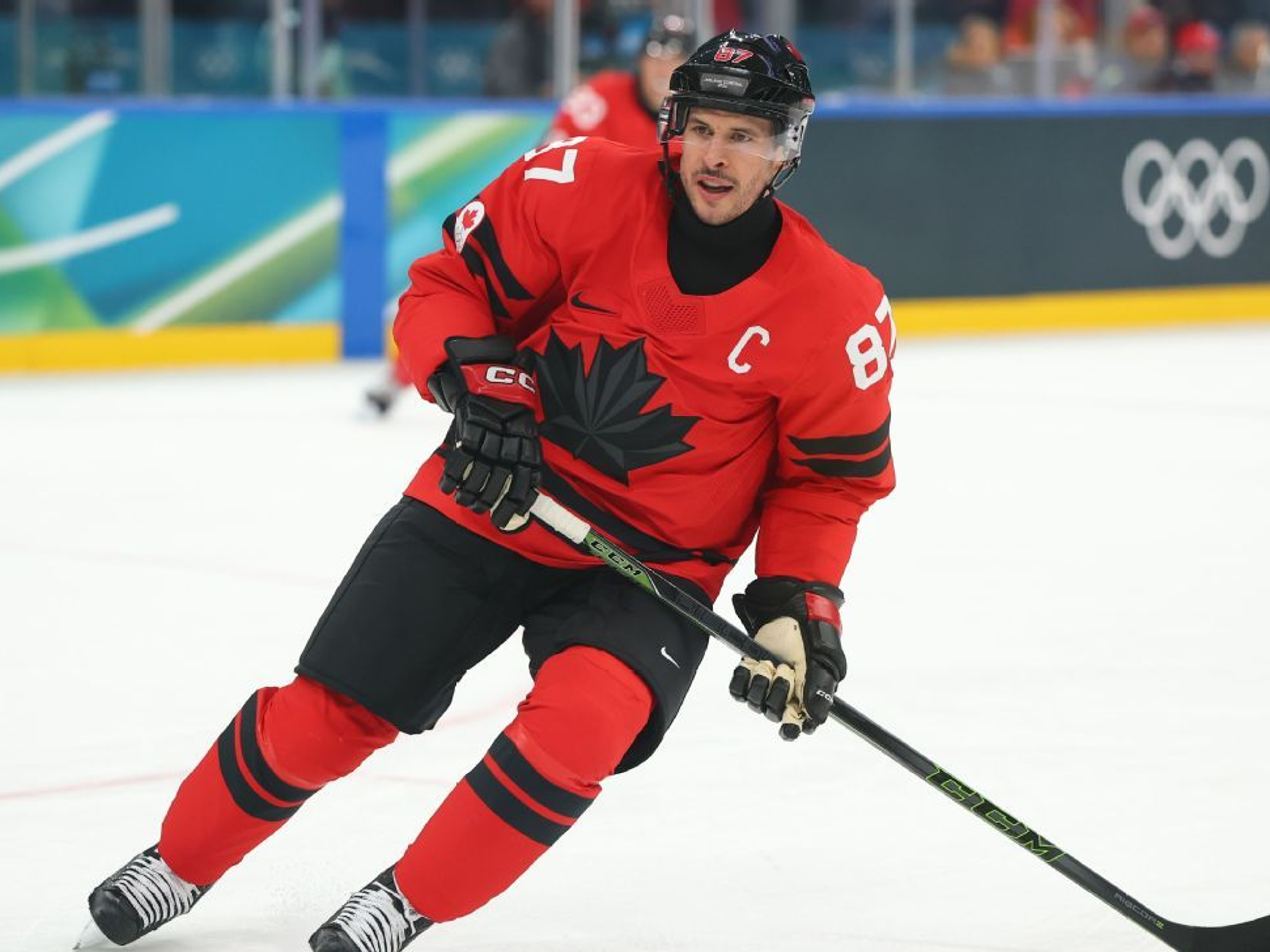
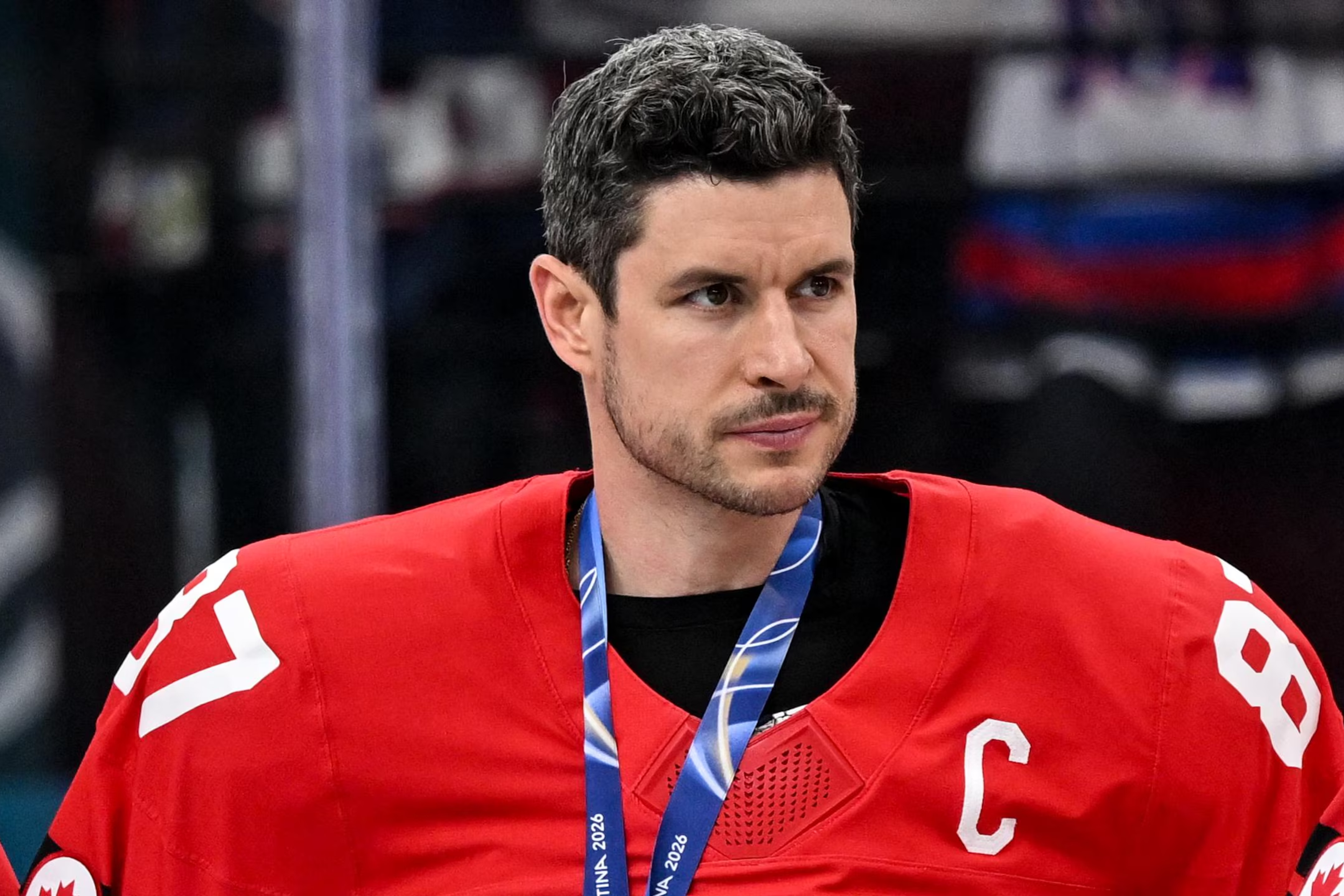
Sidney Crosby was having a strong Olympic tournament. Through Canada’s first three games in Milan, he had two goals and four assists.
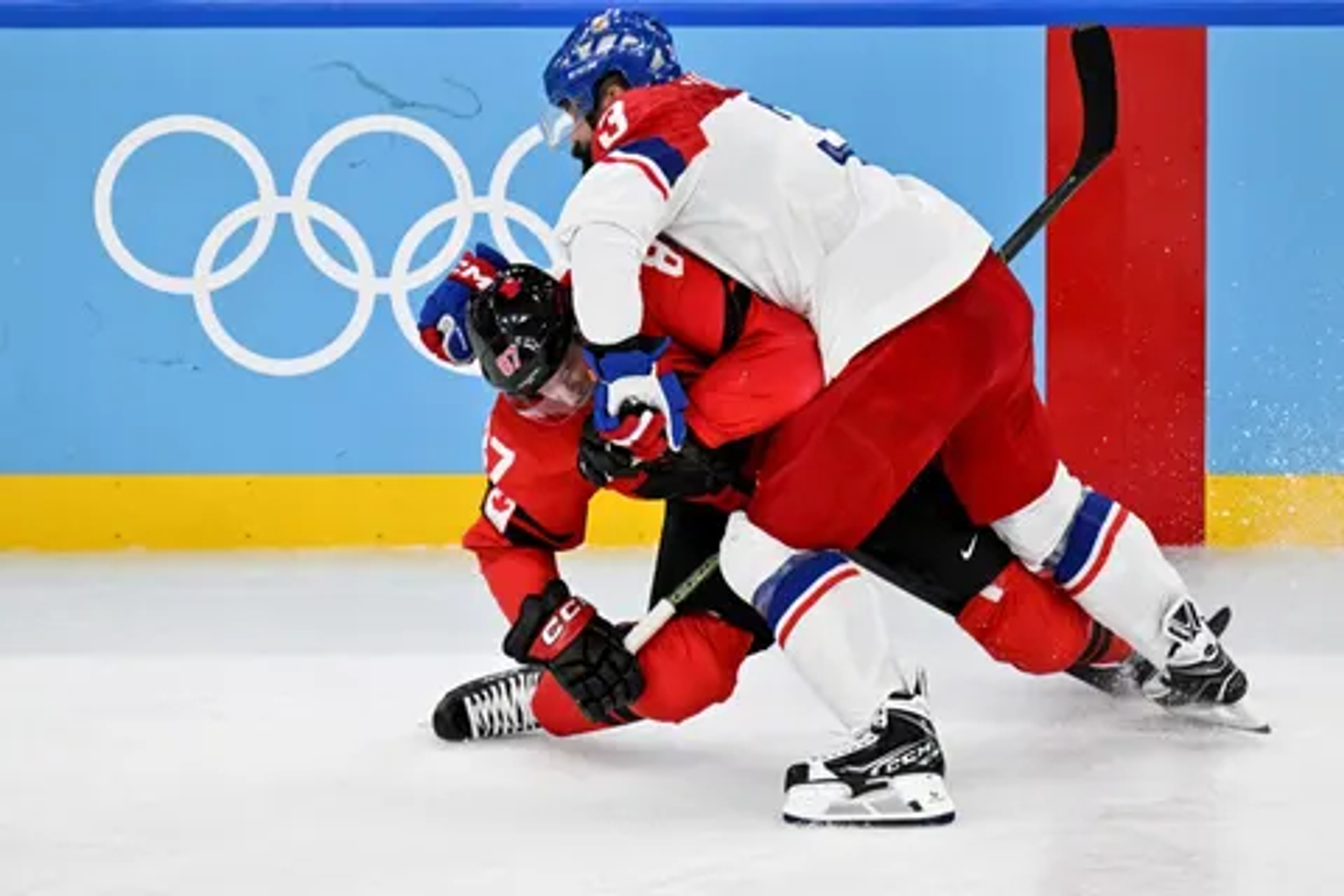
Then, early in the second period of the quarterfinal against Czechia on February 18, he was caught in a sequence along the boards, absorbing contact in quick succession as he braced for a hit from defenseman Radko Gudas. He went to the dressing room shortly after and did not return.
Canada advanced without him, but Crosby was ruled out of Friday’s semifinal against Finland after being called a game-time decision. He skated at an optional practice on Saturday, and there was real optimism he could play in the gold medal game against the United States.
On Sunday, he did not. Crosby made the decision himself, explaining afterward that he did not feel he could play at the level the game required. Canada lost 2 to 1 in overtime.
Three days later, the Penguins placed him on injured reserve and said he would miss at least four weeks.
What was the injury?
Neither Team Canada nor the Penguins ever officially described the injury beyond calling it a lower-body injury. Imaging reportedly showed that Crosby had avoided the worst-case scenario.
The clearest detail came from one of his Olympic teammates. On March 12, Mitch Marner said on the Penguins’ pregame broadcast that Crosby had suffered a Grade 2 MCL sprain. Based on the footage, the injury was to his right knee.
That fits with everything else we know: a four-week timeline, no mention of surgery, and an early return to skating.
What is the MCL?
The medial collateral ligament, or MCL, runs along the inside of the knee, connecting the thigh bone to the shin bone.
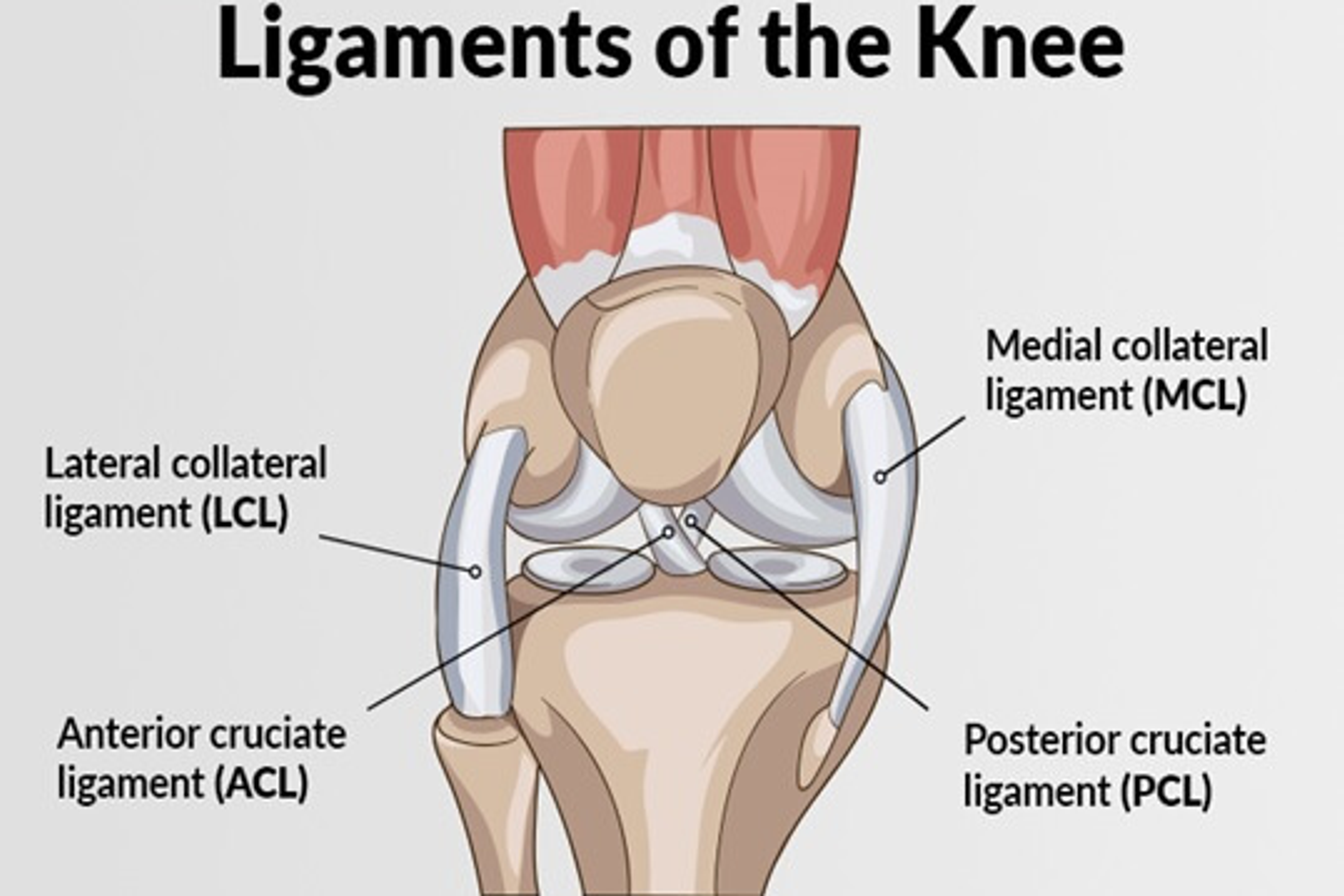
Its main job is to stop the knee from collapsing inward. When a force from the outside pushes the knee toward the other leg, the MCL is what resists it. That is why it is one of the most commonly injured ligaments in contact sports like hockey.
MCL injuries are graded on a scale of one to three:
- Grade 1: The ligament is stretched, but its fibres remain intact.
- Grade 2: The ligament is partially torn.
- Grade 3: The ligament is completely torn.
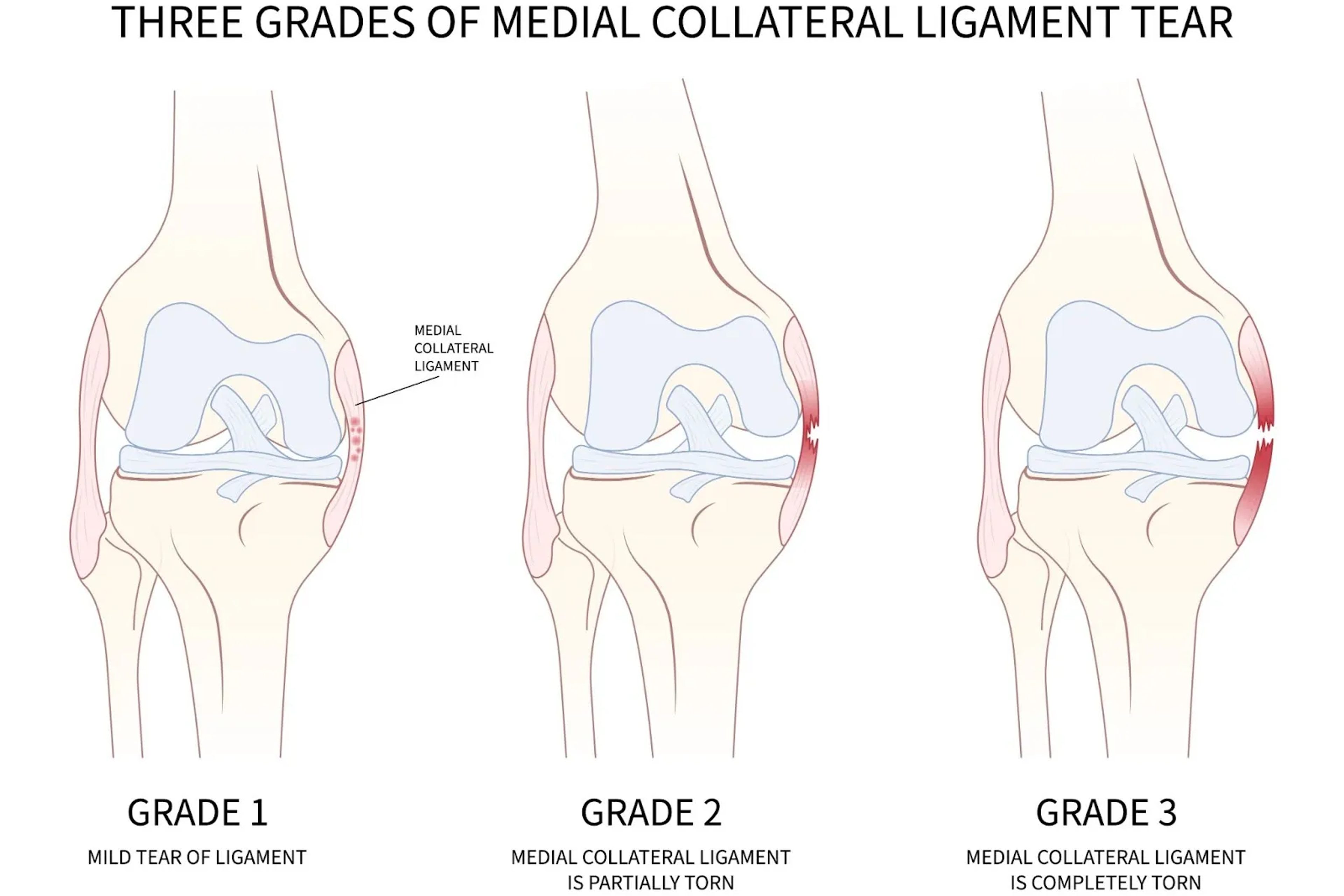
A Grade 2 sprain sits in the middle. The ligament still has some continuity, but it is weakened, painful and can allow some extra movement when the inside of the knee is stressed.
The good news is that the MCL heals well. It sits outside the knee joint and has a good blood supply, so Grade 1 and 2 injuries are almost always treated without surgery. One study found athletes with Grade 2 MCL injuries returned to sport after an average of about 20 days.
Why couldn’t he play four days later?
This is the question many Canadian fans were asking. Crosby skated the day before the final. So why not play?
The answer comes down to timing and the demands of hockey.
In the first days after a ligament injury, the tissue is at its weakest. The body is still in the early inflammatory stage of healing, and the partially torn fibres have not yet started to lay down new tissue. Pain and swelling usually limit how much force the knee can comfortably absorb.
Skating in a practice is one thing. Playing in an Olympic final is another.
Skating places direct stress on the MCL. Every stride pushes off the inside edge of the skate, loading the inside of the knee. Crossovers, tight turns, hard stops and battles along the boards all increase that load. And unlike in practice, a player cannot control the contact he receives in a game.
Playing on a partially torn ligament four days after the injury would have carried two risks. The first is performance. A painful, less stable knee makes it harder to accelerate, change direction and win battles. The second is the knee itself. A second blow to the same area could potentially turn a partial tear into a more serious one.
Crosby said as much himself. In his own words, he made the decision that was best for the group. Given the choice between a 38-year-old captain playing at less than full strength or a healthy forward taking his spot, he chose the team.
What did the rehab look like?
While every rehabilitation program is individualized, a four-week recovery from a Grade 2 MCL sprain would generally follow a progression like this:
Week 1
Protect the knee
The early focus is on managing pain and swelling while restoring comfortable movement. A hinged brace may protect the knee from sideways stress. Exercises focus on reactivating the quadriceps, along with gentle bending and straightening. Stationary cycling is often introduced early, since it keeps the athlete conditioned without stressing the inside of the knee.
Weeks 2 to 3
Rebuild strength and return to the ice
As the ligament heals, strengthening progresses for the quadriceps, hamstrings, glutes and hip muscles, along with balance and control work on one leg. Skating is gradually reintroduced, starting with straight-line strides before moving on to crossovers, edge work and quick changes of direction. By the second week of March, Crosby was back on the ice at Penguins practices.
Week 4 and beyond
Return to play
The final stage focuses on whether the knee can handle the full demands of an NHL game, including contact. On March 16, Crosby was still taking line rushes as an extra forward. Two days later, he was in the lineup.
How did his return go?
Crosby returned on March 18 against the Carolina Hurricanes, 28 days after the injury and almost exactly on the four-week timeline. He had missed 11 games.
He did not take long to make an impact. Crosby scored on a backhand in the second period to tie the game, added a third-period assist, and finished with four shots in 18:33 of ice time. The Penguins lost 6 to 5 in overtime, but their captain looked like himself.
Then came a scare. On March 26 in Ottawa, his fifth game back, Crosby left in the first period with another lower-body injury after playing just 6:39. He sat out the next game against the Dallas Stars.
The Penguins would not say whether it was related to the Olympic injury, and it is important not to assume it was. Reports from New York suggested it did not appear to be the same injury.
Either way, it was brief. Crosby took full contact in practice on March 29 and returned the next night against the Islanders, picking up two assists in an 8 to 3 win. On March 31, he added another assist in a 5 to 1 win over the Detroit Red Wings, playing just over 18 minutes.
What does this mean for the Penguins?
With the regular season winding down, the Penguins are in a playoff position and fighting for one of the top spots in the Metropolitan Division.
From a medical standpoint, a Grade 2 MCL sprain that has been given four weeks to heal generally does well. The ligament heals with scar tissue that continues to strengthen for months after an athlete returns, so the knee may not be at 100 percent yet, even if it is strong enough to play.
That is why the next few weeks matter. A heavy schedule, the intensity of a playoff race and the physical nature of postseason hockey will all test the knee. The brief absence in late March is a reminder that, at 38, managing his workload may be just as important as the knee itself.
For now, the signs are encouraging. Crosby returned on schedule, scored in his first game back, and has three assists in two games since his most recent absence.
The gold medal game will remain the one that got away. But the Penguins have their captain back for the stretch run.