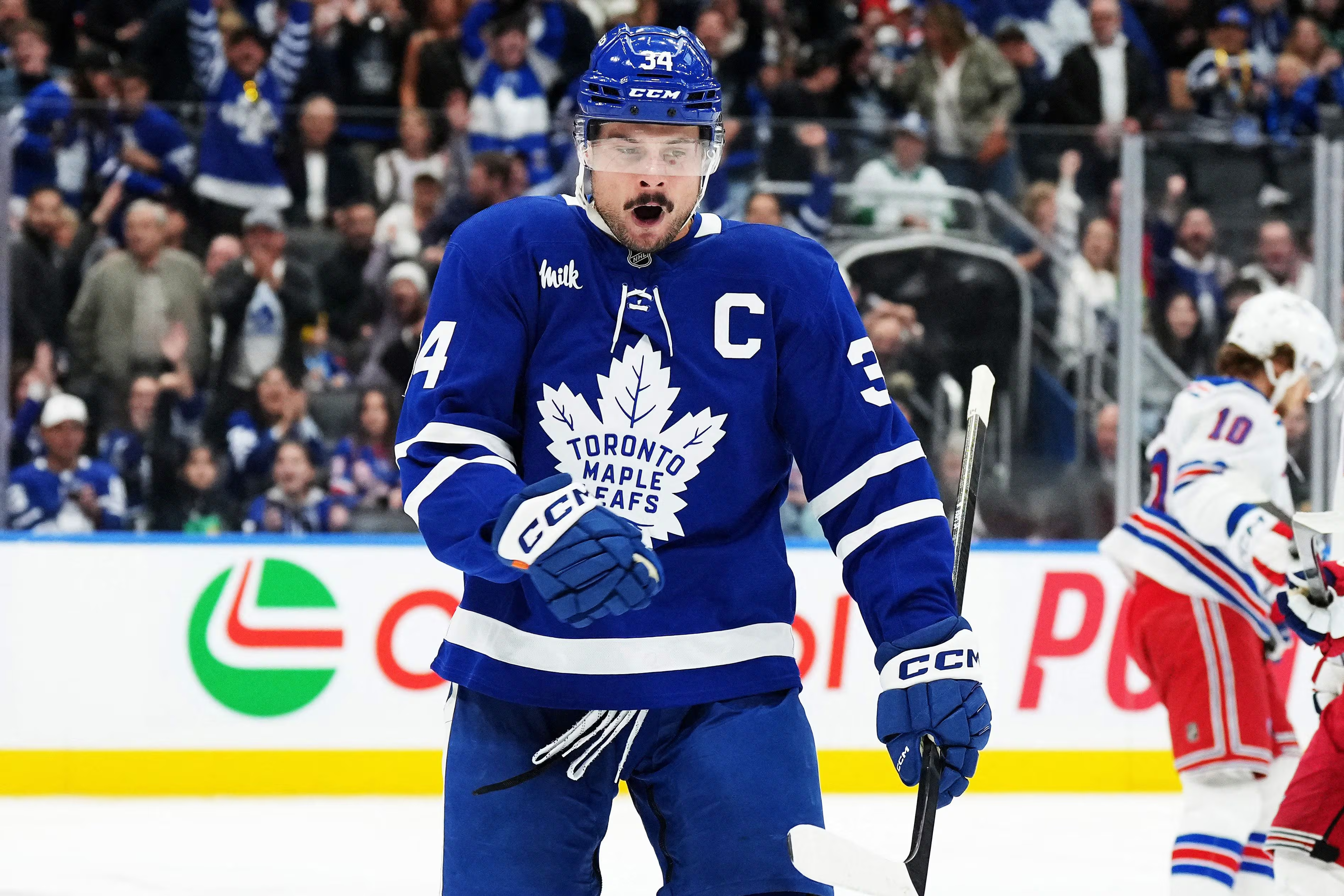
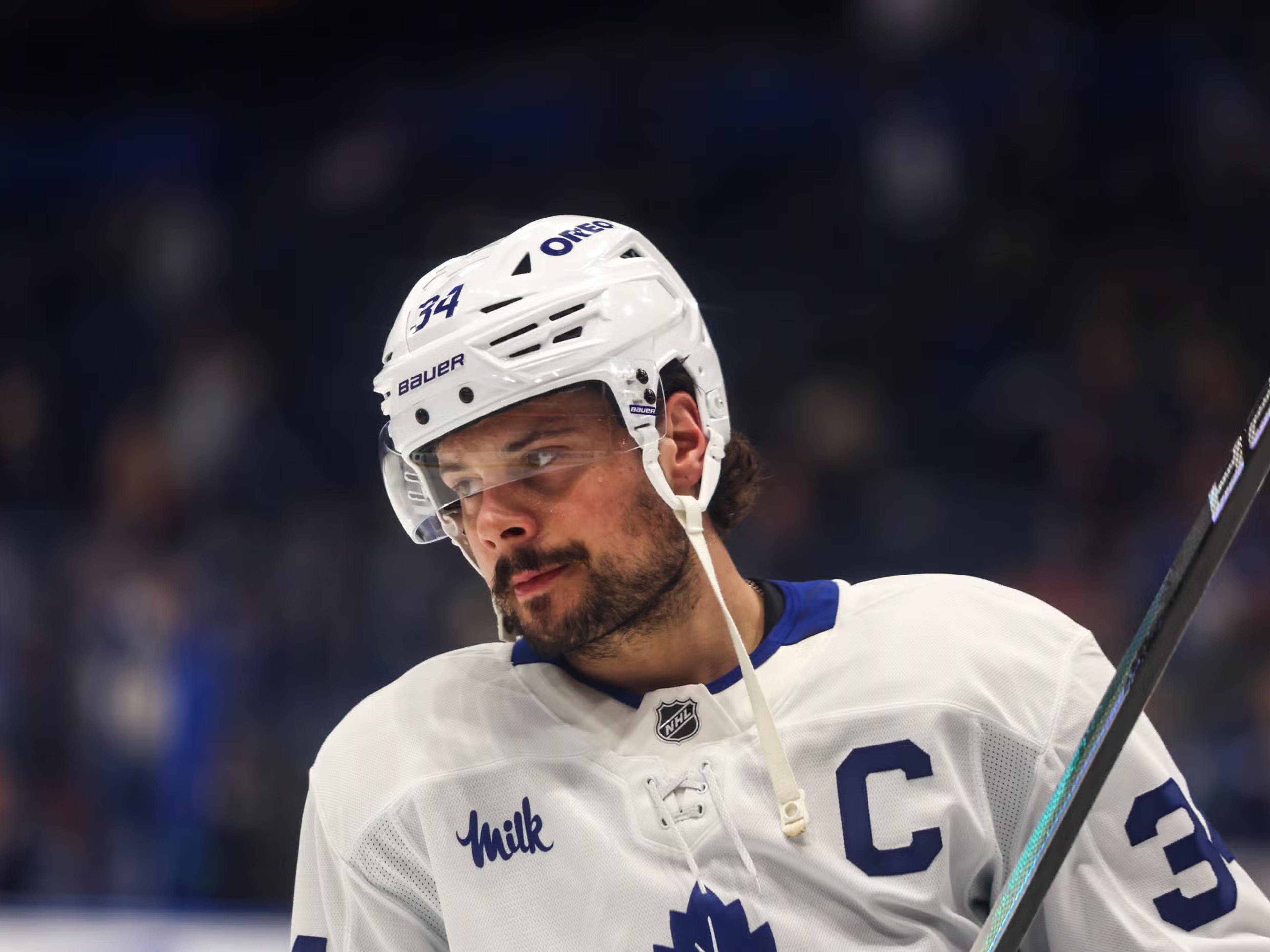
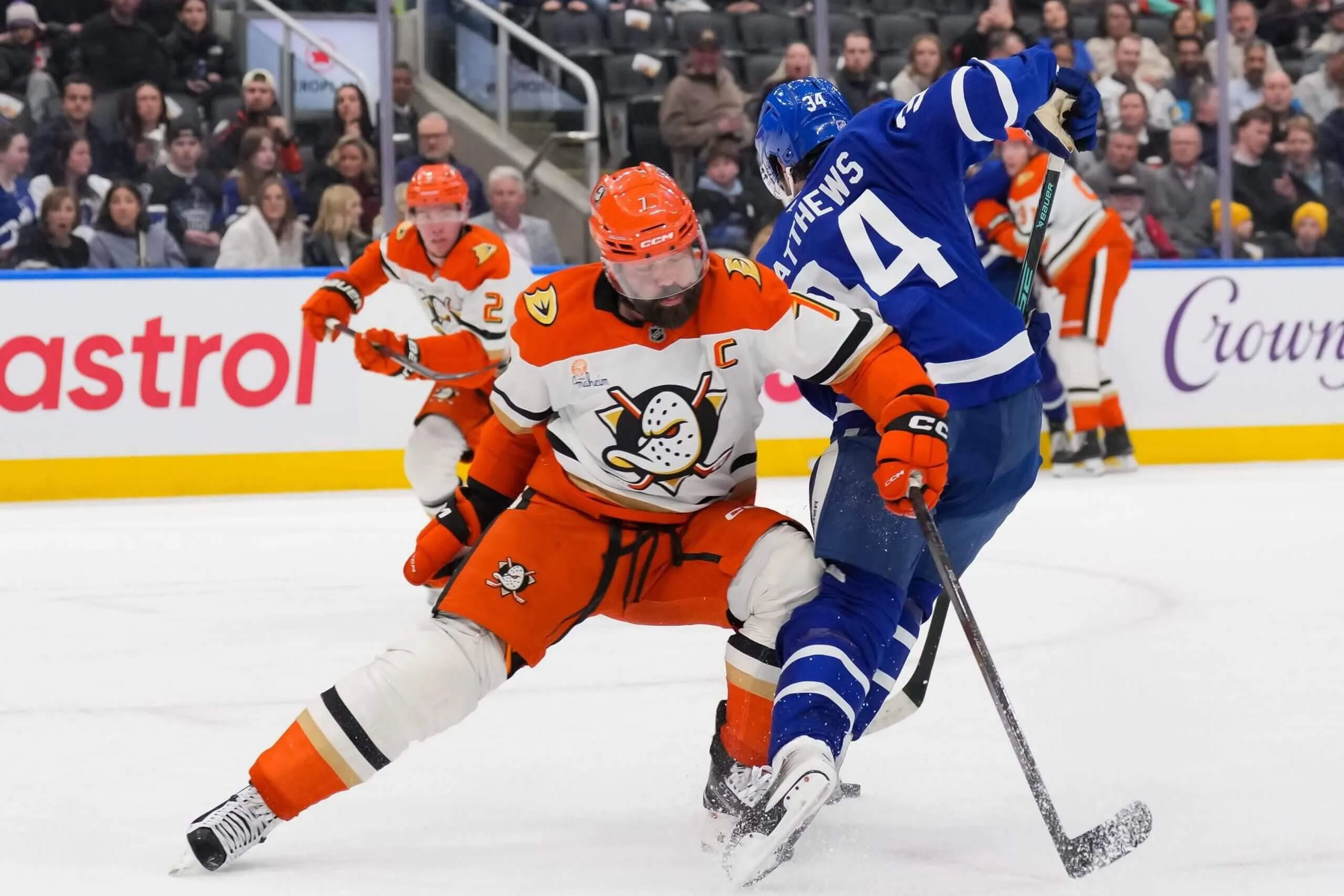
Auston Matthews had already scored in the Maple Leafs’ 6 to 4 win over the Anaheim Ducks on March 12 when, at 15:47 of the second period, Radko Gudas drove through him in front of the net.
Gudas’ left leg made contact with Matthews’ left knee. Matthews immediately grabbed at his leg, could not put weight on it, and needed help getting off the ice. Gudas was given a five minute major and a game misconduct, and was later suspended five games.
The next day, the Maple Leafs announced the diagnosis: a Grade 3 MCL tear and a quad contusion. Matthews would miss the rest of the season and be reevaluated in two weeks.
He did not wait two weeks. On March 19, one week after the injury, Matthews underwent surgery in New York City to repair the torn ligament. The team set his recovery timeline at approximately 12 weeks.
What is the MCL?
The medial collateral ligament, or MCL, runs along the inside of the knee. It connects the femur, the thigh bone, to the tibia, the shin bone.
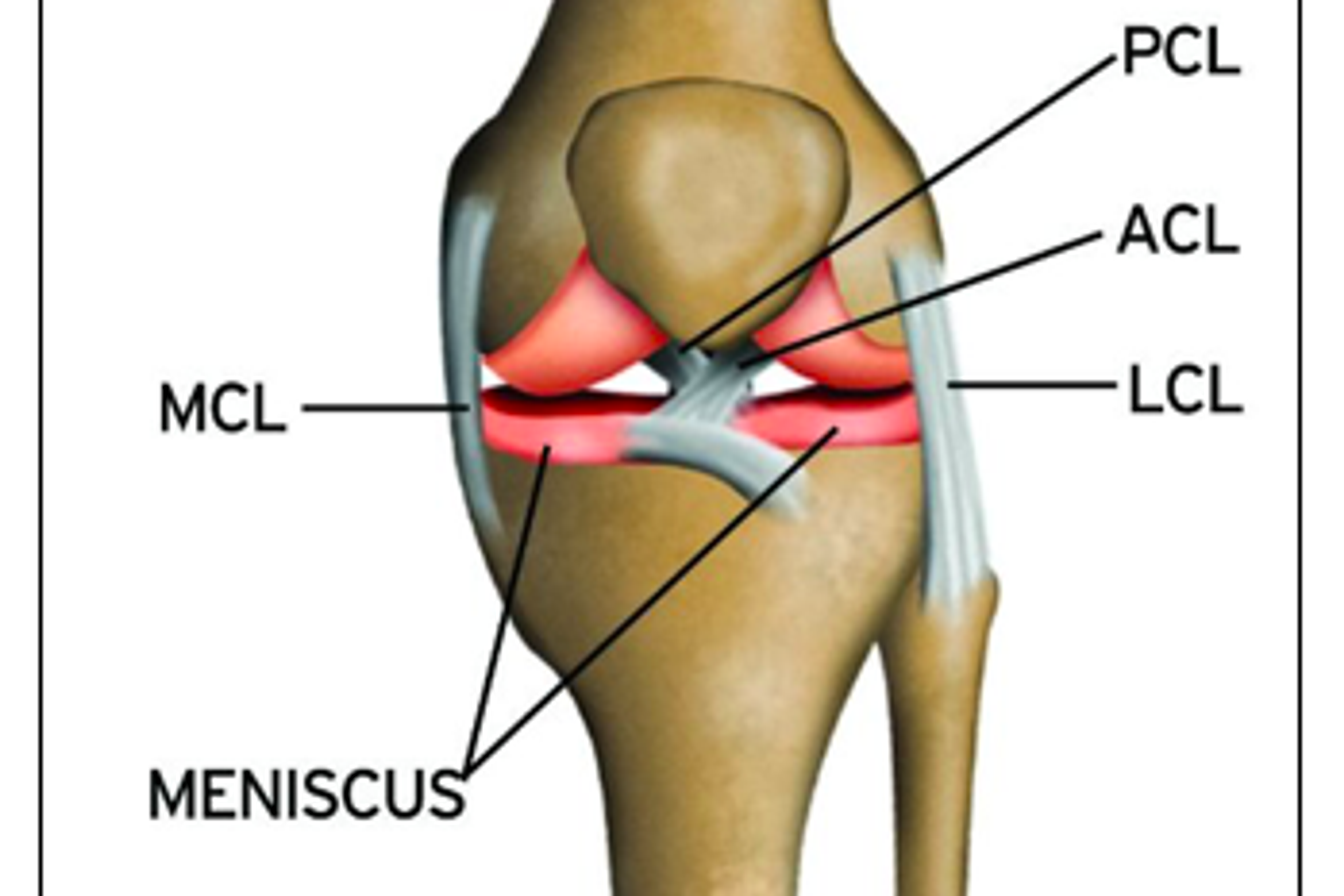
Its main job is to stop the knee from collapsing inward. When a force pushes the knee toward the other leg, the MCL is the structure that resists it.
That is exactly why it is so commonly injured in contact sports. A blow to the outside of the knee drives the joint inward, stretching the ligament on the inside. Depending on the force, the MCL can be stretched, partially torn, or completely torn.
What does Grade 3 mean?
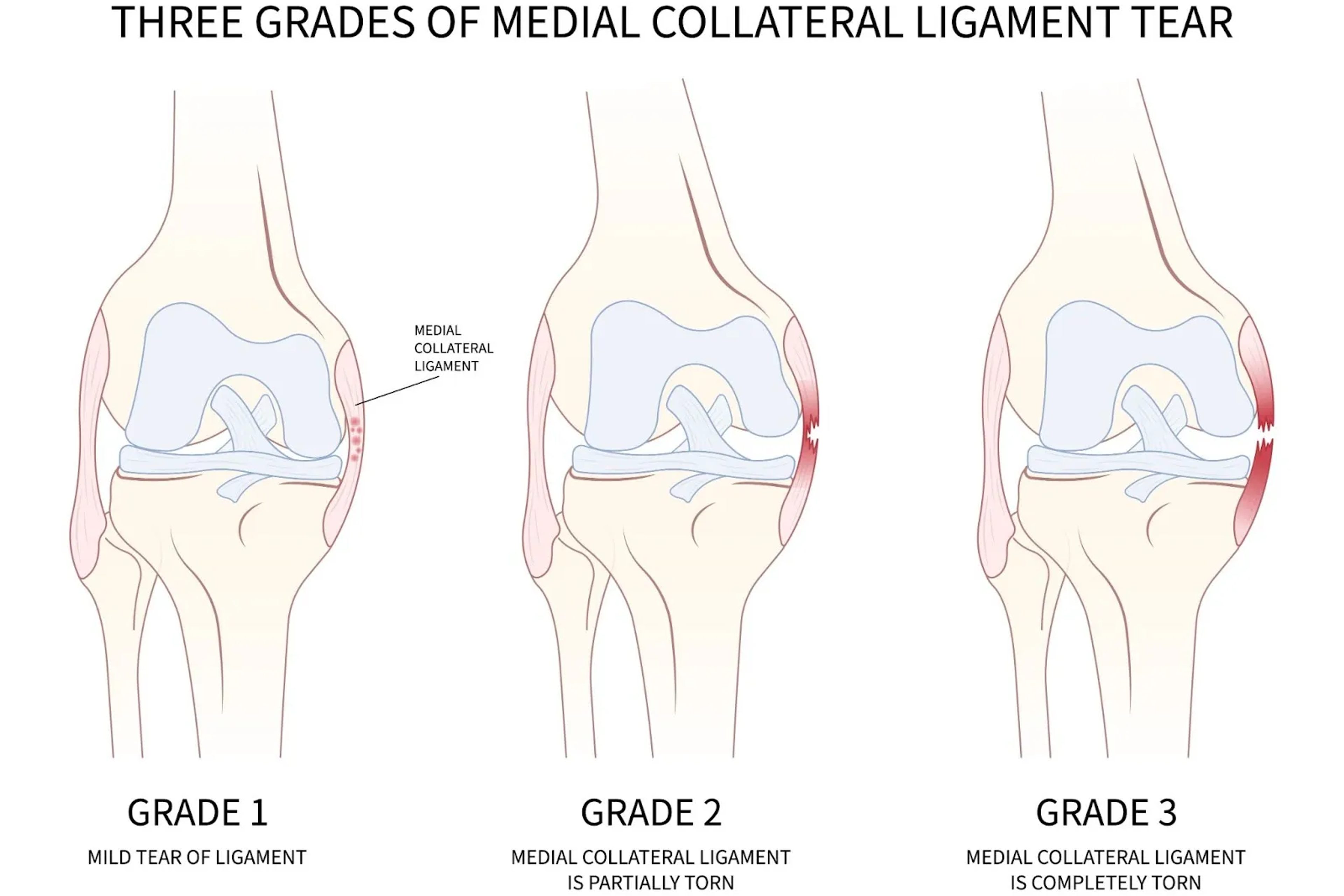
MCL injuries are graded on a scale of one to three:
- Grade 1: The ligament is stretched, but the fibres remain intact.
- Grade 2: The ligament is partially torn.
- Grade 3: The ligament is completely torn.
A Grade 3 tear means the MCL is no longer doing its job. When the knee is stressed from the outside, there is no firm stopping point, and the inside of the joint can open up.
Why surgery?
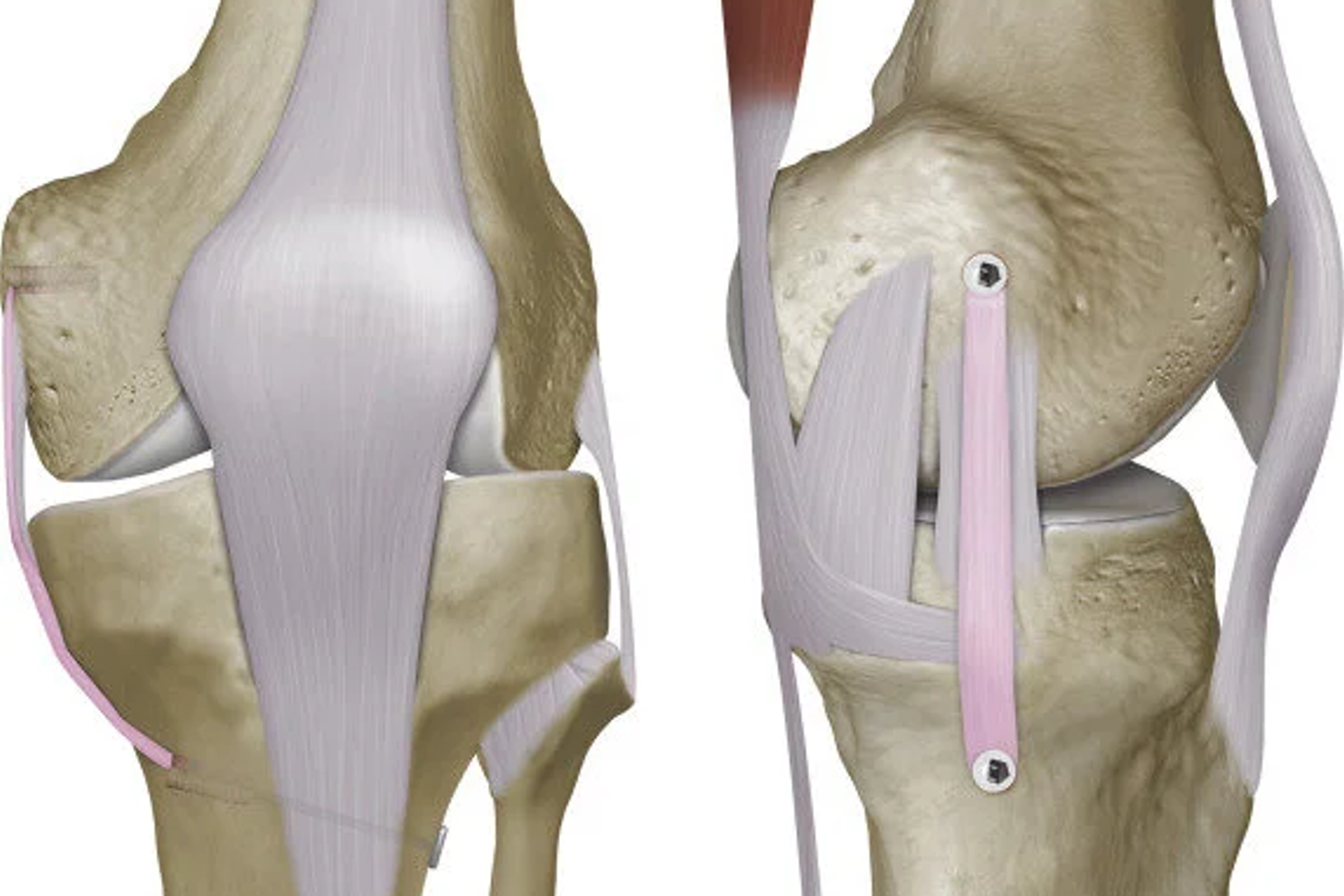
This is the part that surprised some fans. Unlike the ACL, the MCL sits outside the knee joint and has a good blood supply. That gives it a strong ability to heal on its own, and many MCL injuries, including some complete tears, are treated without surgery.
Research on isolated Grade 3 tears treated without surgery has reported an average return to sport of around nine weeks.
So why operate?
The Maple Leafs have not shared the specific findings that led to the decision, so it is important not to assume what the imaging showed. However, the medical literature points to several situations where surgery is generally recommended for a complete MCL tear:
- The knee remains significantly unstable when stressed.
- The ligament is torn off the bone, sometimes taking a small piece of bone with it.
- The torn end of the ligament gets trapped in a position where it cannot heal properly.
- Other ligaments in the knee are also injured.
The team has only announced an MCL tear and a quad contusion, with no mention of other ligament damage.
There is also a broader trend. Some research in elite athletes suggests that complete MCL tears treated without surgery can be associated with longer recoveries and a higher risk of reinjury, which has led many sports medicine surgeons to favor repair in high level athletes.
Timing may have played a role too. With the Leafs out of the playoff picture and his season already over, there was no pressure to rush. Repairing the ligament now gives Matthews a more predictable path, with the entire summer to recover before next season.
What about the quad contusion?
The second part of the diagnosis has received less attention, but it matters.
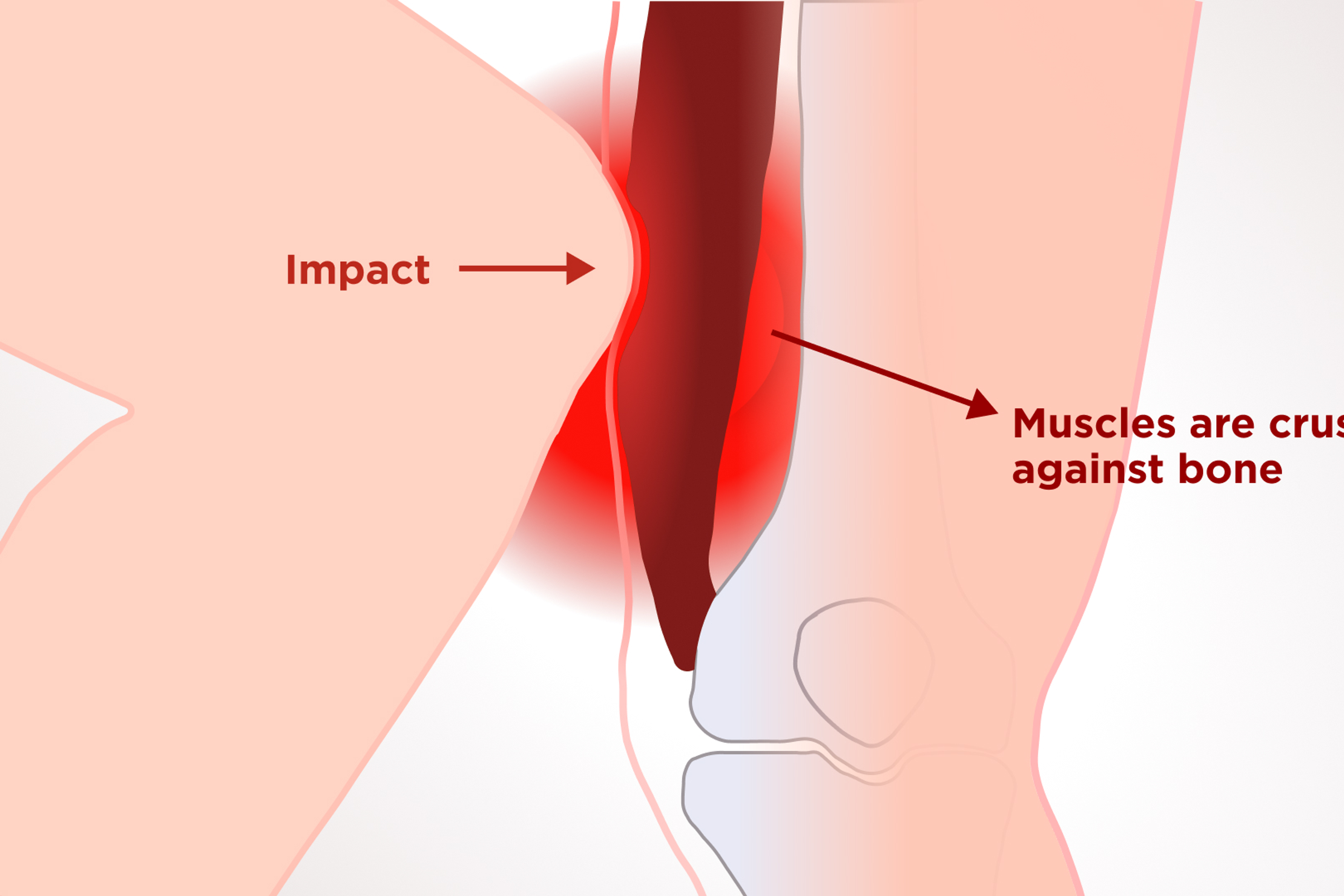
A quad contusion is a deep bruise in the quadriceps, the large group of muscles on the front of the thigh. A direct blow crushes the muscle against the femur and causes bleeding within the muscle. Most hockey fans know it as a Charley horse.
Most contusions heal without major issues, but a significant one can make it painful and difficult to bend the knee in the days after the injury.
One of the main concerns with a deep thigh contusion is a complication called myositis ossificans. This is when the body lays down bone within the bruised muscle as it heals. It can cause pain and limit how far the knee can bend. In one study of military cadets, it developed in about 9 percent of quad contusions, with limited knee motion and delays in treatment among the risk factors.
To help prevent this, one common approach is to bend the knee to around 120 degrees and hold it there for the first 24 hours, keeping the muscle on stretch, then encouraging gentle, pain-free bending as early as possible.
This creates an interesting challenge in Matthews’ case. The contusion generally benefits from restoring knee bending early, while a freshly repaired MCL usually needs its motion protected in the first weeks after surgery. Balancing those two priorities will likely be one of the medical staff’s key considerations early in his rehabilitation.
What could the next 12 weeks look like?
While every rehabilitation program is individualized, a 12-week recovery from MCL repair would generally follow a progression like this:
Weeks 0 to 2
Protect the repair
The early focus is on protecting the repaired ligament and controlling swelling. That usually means a hinged knee brace, crutches with limited weight through the leg, and a controlled range of motion. Exercises would focus on getting the quadriceps firing again, along with managing the contusion and gradually restoring knee bending.
Weeks 2 to 6
Restore movement
As the repair heals, weight bearing would progress and knee motion would gradually increase. Stationary cycling is often introduced during this period. Strengthening would begin with exercises that load the leg in a controlled way, while still avoiding forces that push the knee inward.
Weeks 6 to 10
Rebuild strength
The focus shifts to restoring full motion and rebuilding strength in the quadriceps, hamstrings, glutes and hip muscles. Balance and control work on one leg would become more important. If his recovery continues as expected, he could begin returning to the ice during this period.
Weeks 10 to 12 and beyond
Return to hockey
The final stage focuses on whether the knee can tolerate the demands of hockey. That is especially important for the MCL, because skating itself puts stress on the inside of the knee. Every stride pushes off the inside edge of the skate, and crossovers, tight turns and hard stops all load the medial side of the knee. The progression would typically move from straight line skating to crossovers, edge work, acceleration and shooting, with contact added last.
What does this mean for next season?
From the March 19 surgery, a 12-week timeline points to a recovery in mid-June.
That is significant. With training camp in September, Matthews would have roughly three months to train normally after his recovery. Reports have suggested there is plenty of confidence he will be ready for the start of next season.
The one thing he is likely to miss is the spring. He is unlikely to represent the United States at the world championships, a tournament that draws its players from teams that miss the playoffs.
It is also worth remembering where Matthews was before the injury. He captained the United States to Olympic gold in February, but his NHL season had been a difficult one, finishing with 27 goals and 53 points in 60 games, both career lows. The Maple Leafs are on track to miss the playoffs for the first time since his rookie season.
The knee should not be what defines his next season. If his rehabilitation progresses without setbacks, the timeline gives him a full summer, a normal training camp, and a healthy start in October.