
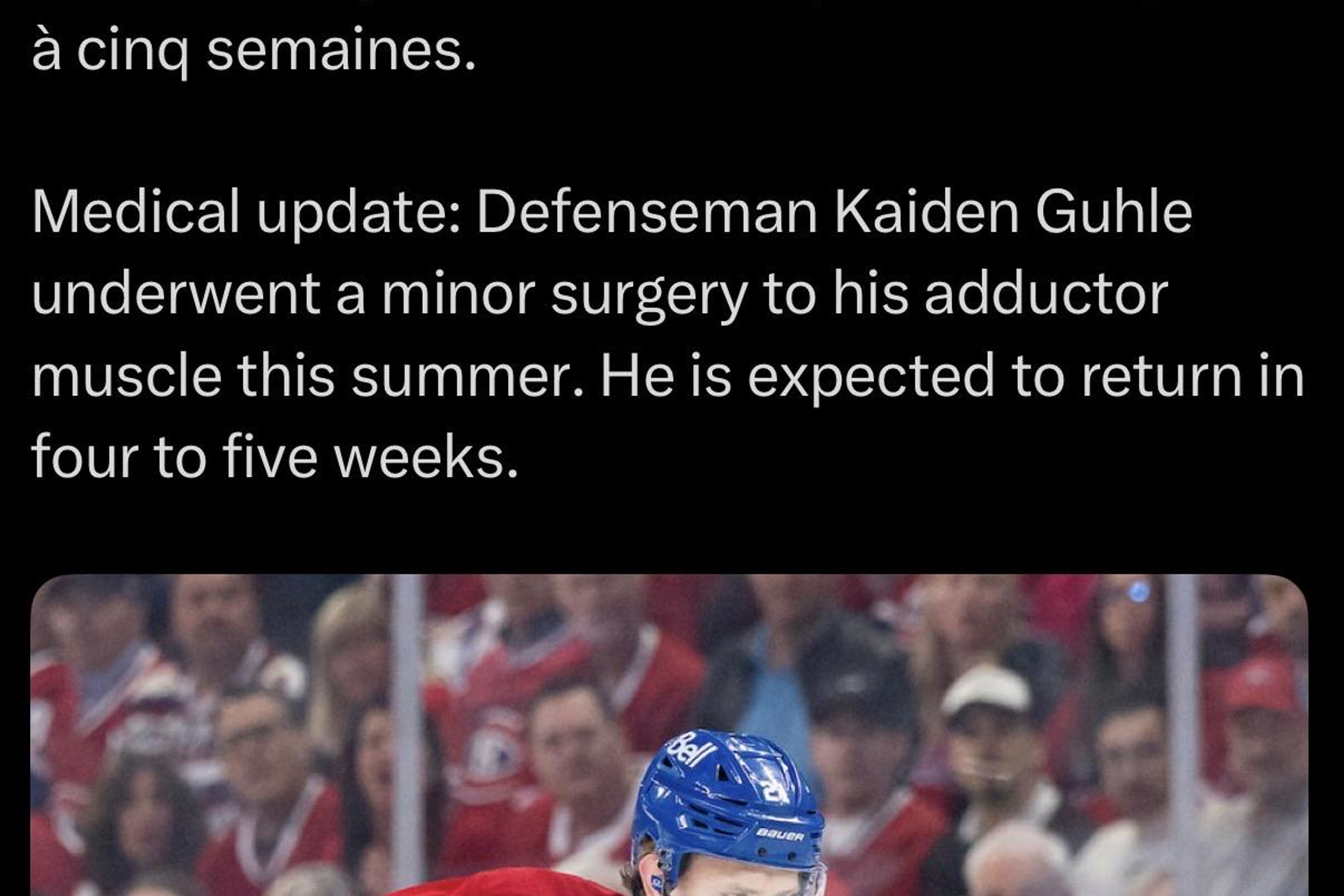
The Canadiens announced Wednesday morning that defenseman Kaiden Guhle underwent minor surgery on his adductor muscle this summer. The team expects him to return in four to five weeks.
Many fans may have never heard of the adductor muscles or even know where they are. So, what exactly did Guhle have surgery on, why is this muscle group important for a hockey player, and what will his recovery look like?
Let's break it down.
The muscle behind the headline
The adductors are a group of muscles located along the inside of the thigh. They include the adductor longus, adductor brevis, adductor magnus, gracilis and pectineus.
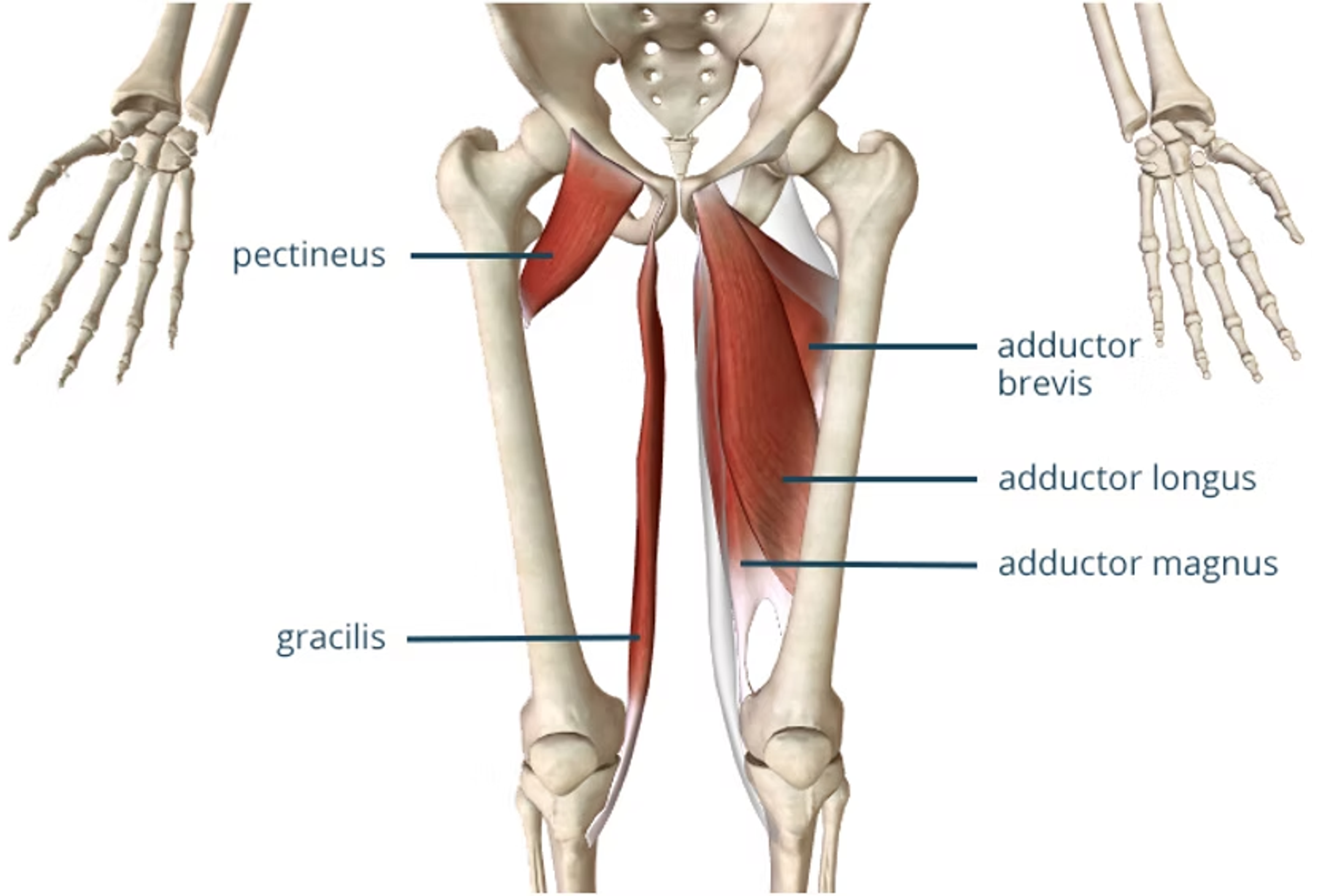
Their main function is to bring the leg toward the body's midline. For a hockey player, this movement is involved in almost every stride.
The adductors help control the leg as it returns toward the body during skating. They also contribute to pushing off, changing direction, crossing over and maintaining control during tight turns.
For defensemen, these demands can become even greater when stopping quickly, changing direction to close a gap or battling along the boards.
The adductor longus is particularly important because it is one of the muscles most commonly involved in groin injuries in hockey. The muscle and its tendon are exposed to high forces, particularly when the muscle is lengthening while producing force.
For example, this can happen when a player pushes hard off one skate to change direction or accelerate, while the opposite leg moves away from the body's midline. The adductor has to produce force while being stretched, creating high stress on the muscle and tendon. This combination of force and lengthening is one reason why quick changes of direction, powerful skating strides and other explosive movements can place the adductor at risk.
This type of eccentric loading occurs frequently during skating and rapid changes in direction, which can place considerable stress on the adductor region over time.
What does "minor surgery" actually mean?
The Canadiens have not provided details about the exact procedure Guhle underwent, so it is important not to assume what was done.
This is also not Guhle's first issue involving the adductor region. Last November, he underwent surgery to repair a partially torn adductor that did not respond to conservative treatment. That procedure kept him out for approximately two months.
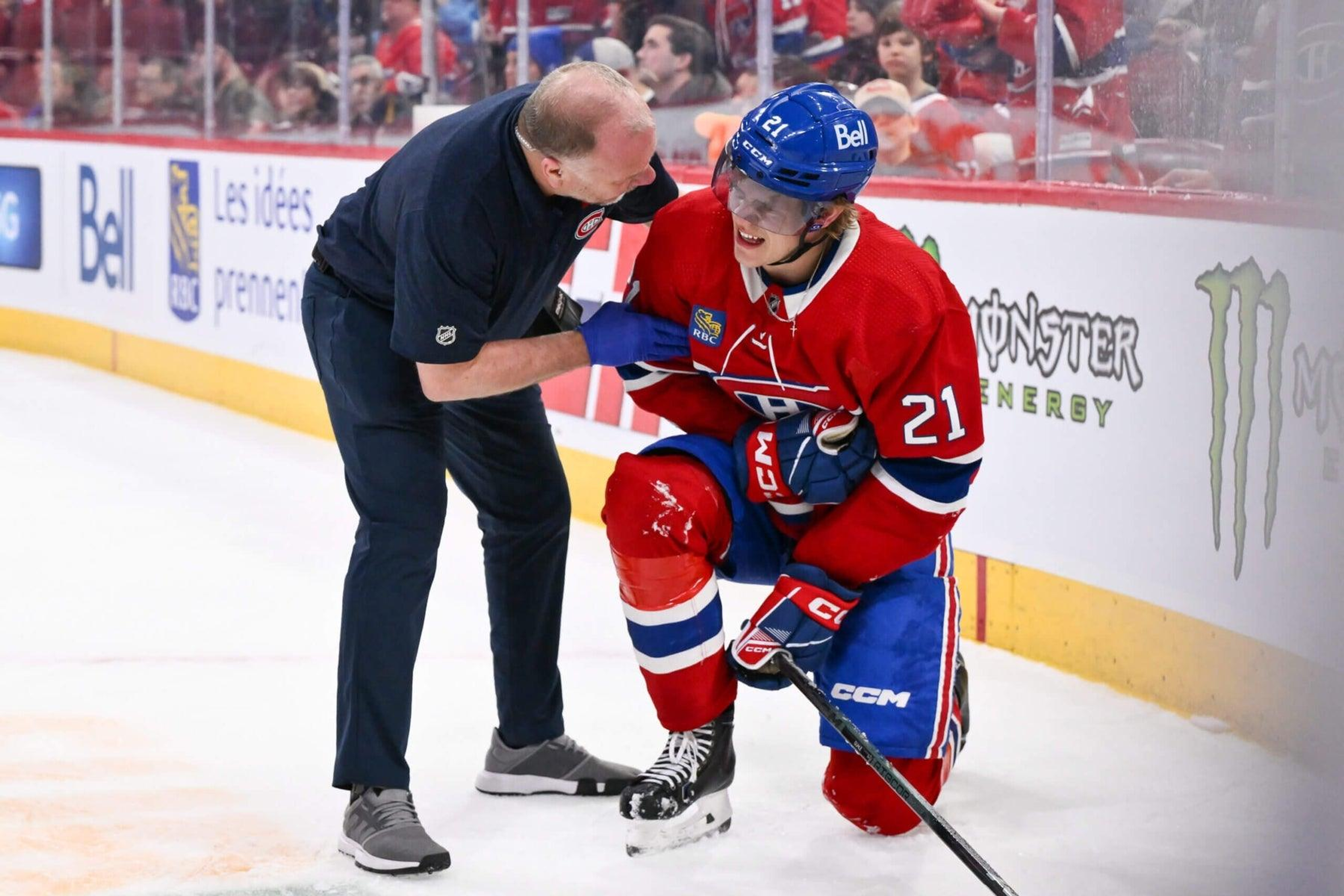
This time, the Canadiens are expecting a much shorter recovery of four to five weeks.
Without knowing the exact procedure, it is difficult to say precisely what that timeline means. However, the shorter expected recovery suggests that the current issue may be more limited than his previous injury.
The important point is that "minor surgery" does not necessarily mean the rehabilitation is insignificant. Even a smaller procedure requires the player to progressively restore mobility, strength and the ability to tolerate the high demands of skating before returning to NHL competition.
What could the next month look like?
While every rehabilitation program is individualized, a four- to five-week timeline would generally involve a gradual progression from protecting the surgical area to restoring strength and eventually returning to hockey-specific movement.
Weeks 0 to 2:
Protect and restore movement
The initial focus would likely be on managing symptoms and gradually restoring comfortable hip and groin movement. Rehabilitation may include gentle range of motion exercises, isometric strengthening and progressive hip mobility work. Conditioning can also begin early when appropriate. Stationary cycling or pool based conditioning may allow Guhle to maintain some cardiovascular fitness without placing the same demands on the adductor region as skating.
Weeks 2 to 4:
Rebuild strength
As symptoms improve, the focus would shift toward progressively loading the adductors. Exercises could include Copenhagen planks, resisted adduction, lateral band exercises and other movements designed to strengthen the muscles around the hip and pelvis. The goal is not simply to make the muscle stronger. The adductors need to tolerate the forces produced during skating, particularly when the muscle is lengthening while producing force. This is why eccentric strengthening can become an important part of the later stages of rehabilitation. If his recovery continues as expected, he would likely be gradually reintroduced to skating during this period. The progression would typically move from controlled skating toward more demanding movements such as crossovers, acceleration and changes of direction.
Weeks 4 to 5 and beyond:
Return to play
The final stage focuses on whether Guhle can tolerate the demands of hockey, rather than simply reaching a specific date on the calendar. That can include full-speed skating, crossovers, rapid changes of direction, defensive movements and eventually contact. Strength testing can also be used to compare the involved side with the opposite leg. An adductor squeeze test is one example of a test that can be used to assess adductor strength and symptoms. The final decision would ultimately depend on how Guhle responds to the progression and whether he can handle the demands of NHL competition without symptoms or limitations.
What does this mean for Montreal?
The Canadiens open their season on September 29 against Toronto.
From September 16, a four- to five-week timeline would put Guhle's projected return between October 14 and October 21. That means he would miss the Canadiens' September 29 season opener against Toronto and potentially the first few weeks of the regular season.
If his rehabilitation progresses without setbacks, he could be working toward a return in mid October. However, the exact timing will depend on how he responds to increasing skating, strength and hockey-specific demands.
For a defenseman whose game relies heavily on skating, changing direction and battling for position, getting the adductor back to full strength will be just as important as simply getting him back on the ice.
The Canadiens will likely be hoping that this shorter rehabilitation allows Guhle to enter the season healthy and ready to handle the demands of a full NHL schedule.