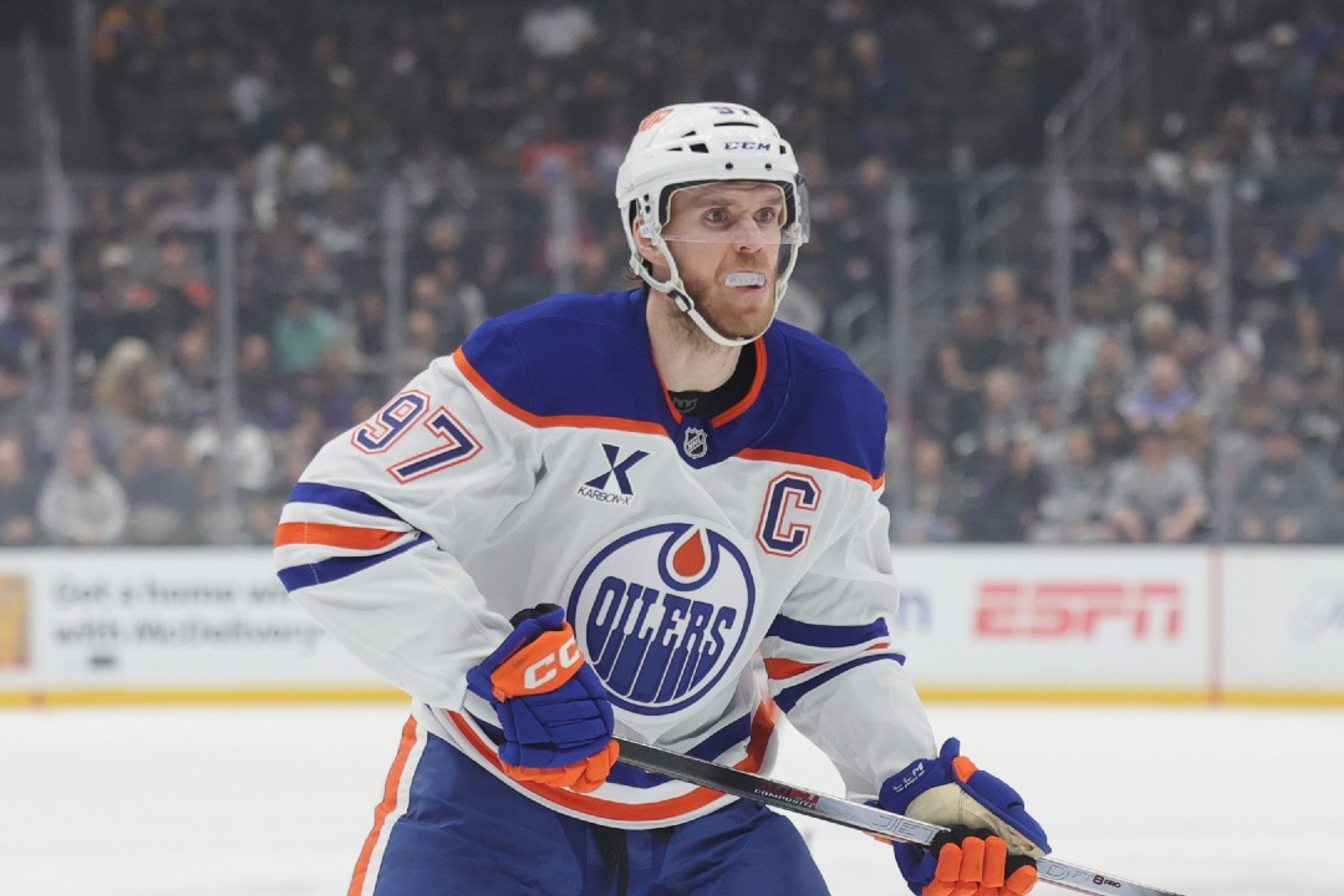
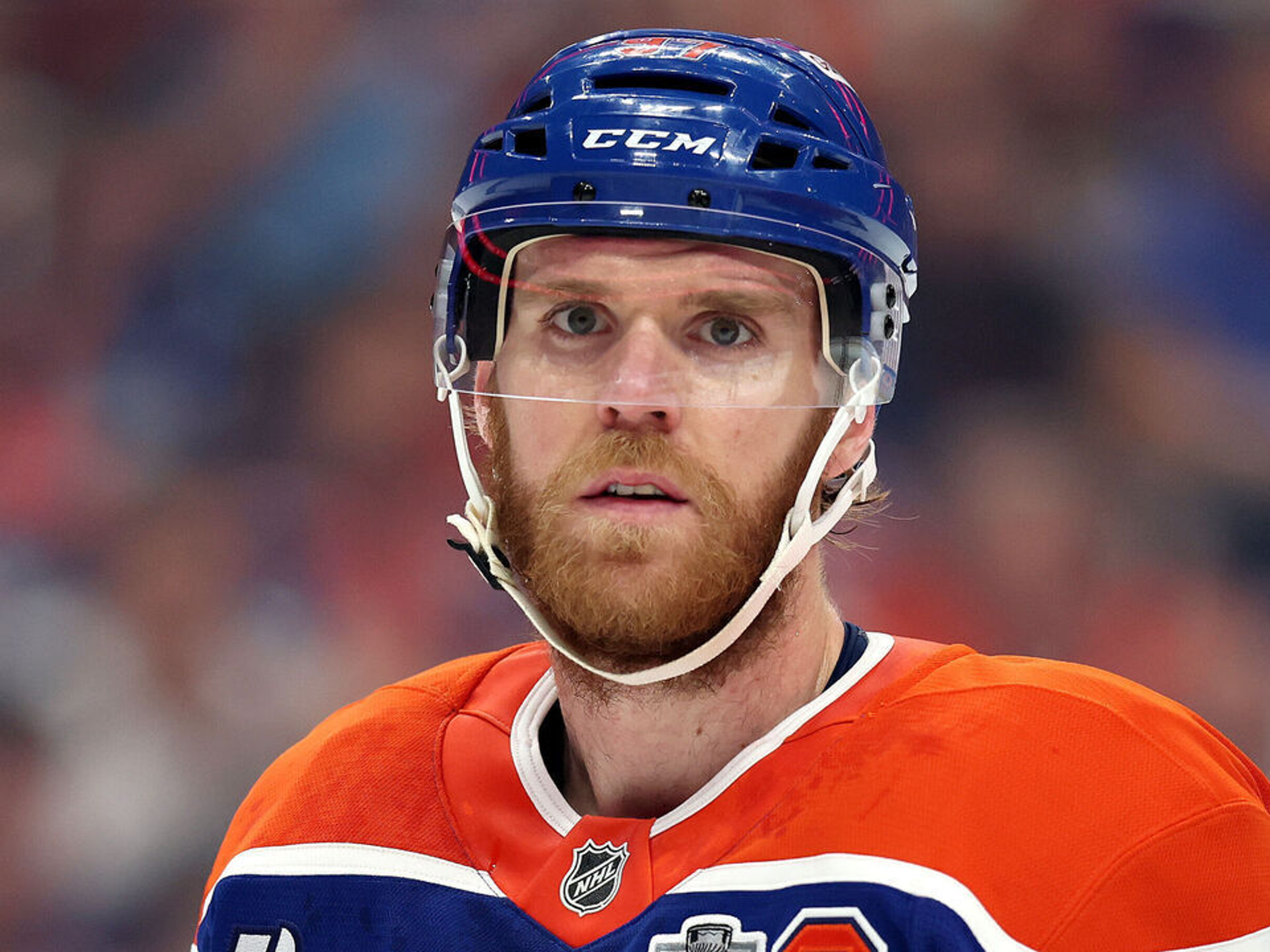
Thirteen games into his NHL career, Connor McDavid was already doing exactly what everyone expected. He had 12 points, led all rookies in scoring, and had been named the NHL’s rookie of the month for October.
Then came November 3, 2015.
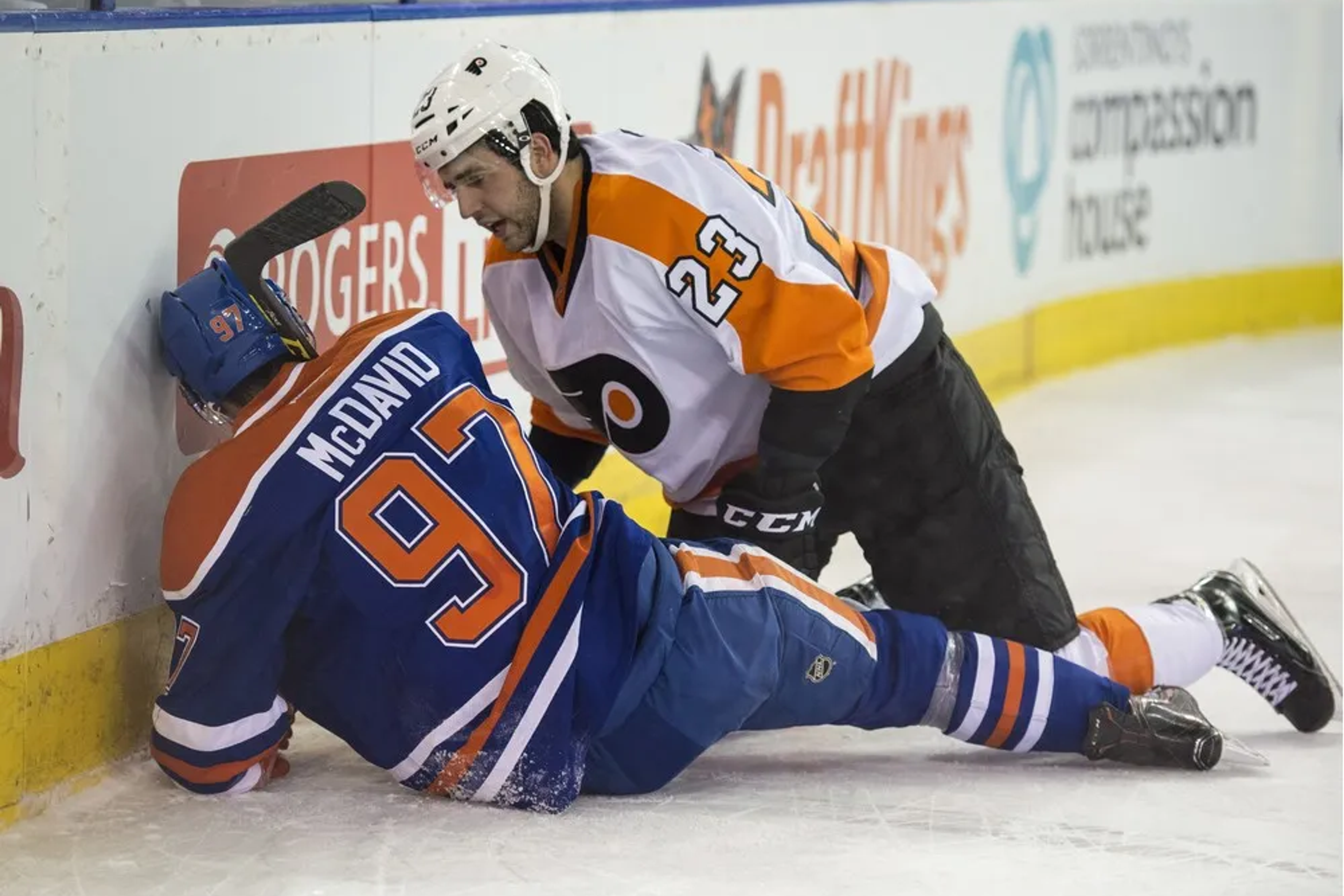
With 1:44 left in the second period against the Philadelphia Flyers, McDavid broke in on a partial shorthanded breakaway. As he cut toward the net, he lost his edge and got tangled up with Flyers defensemen Michael Del Zotto and Brandon Manning. All three went down together and slid into the end boards, with McDavid taking the impact on his left shoulder.
He skated to the bench holding his shoulder, was later seen wearing a sling, and did not return for the third period.
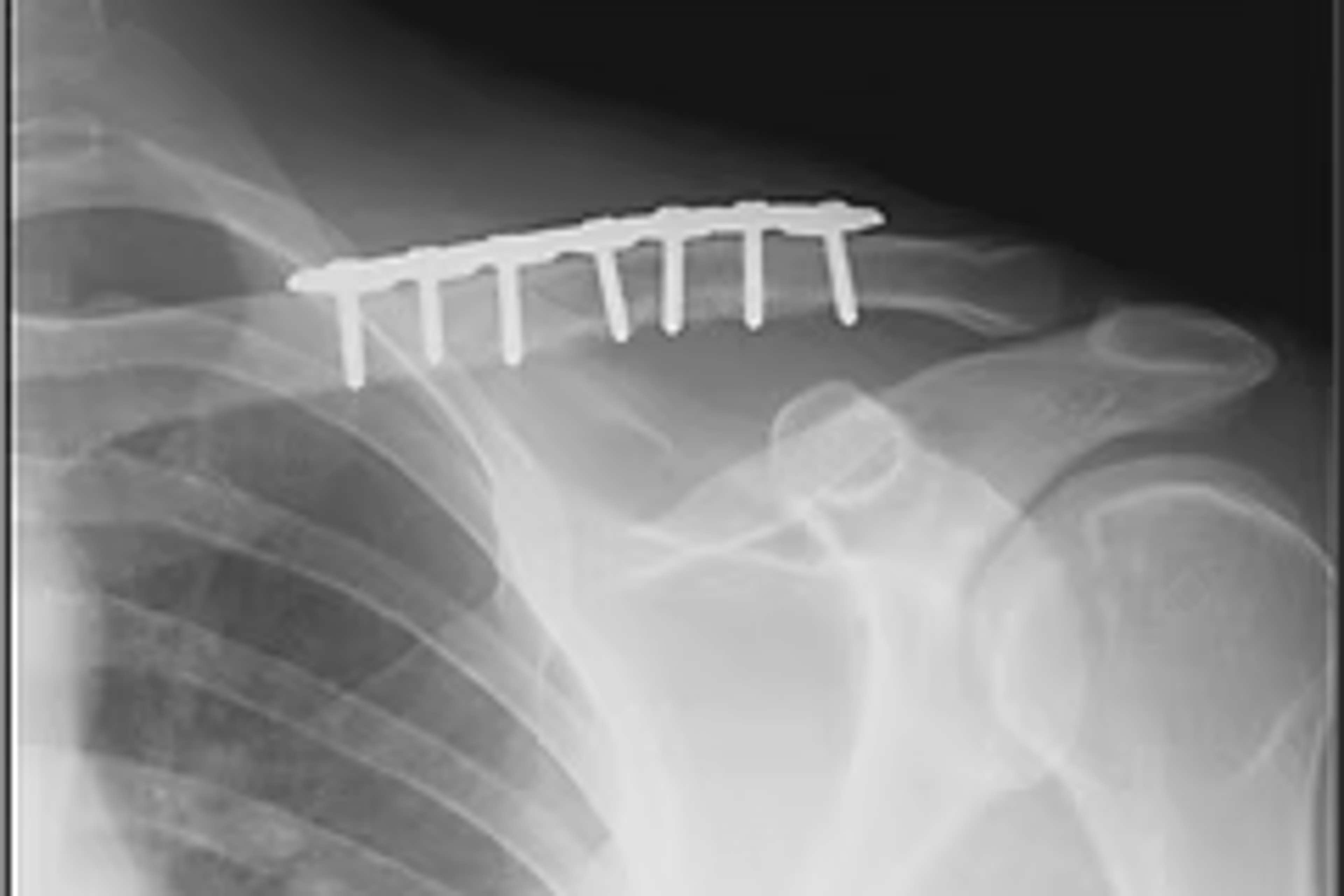
The next morning, Oilers general manager Peter Chiarelli confirmed a fractured left clavicle. McDavid would need surgery, with plates and screws involved, and Chiarelli made a point of saying the recovery would take months, plural.
What is the clavicle?
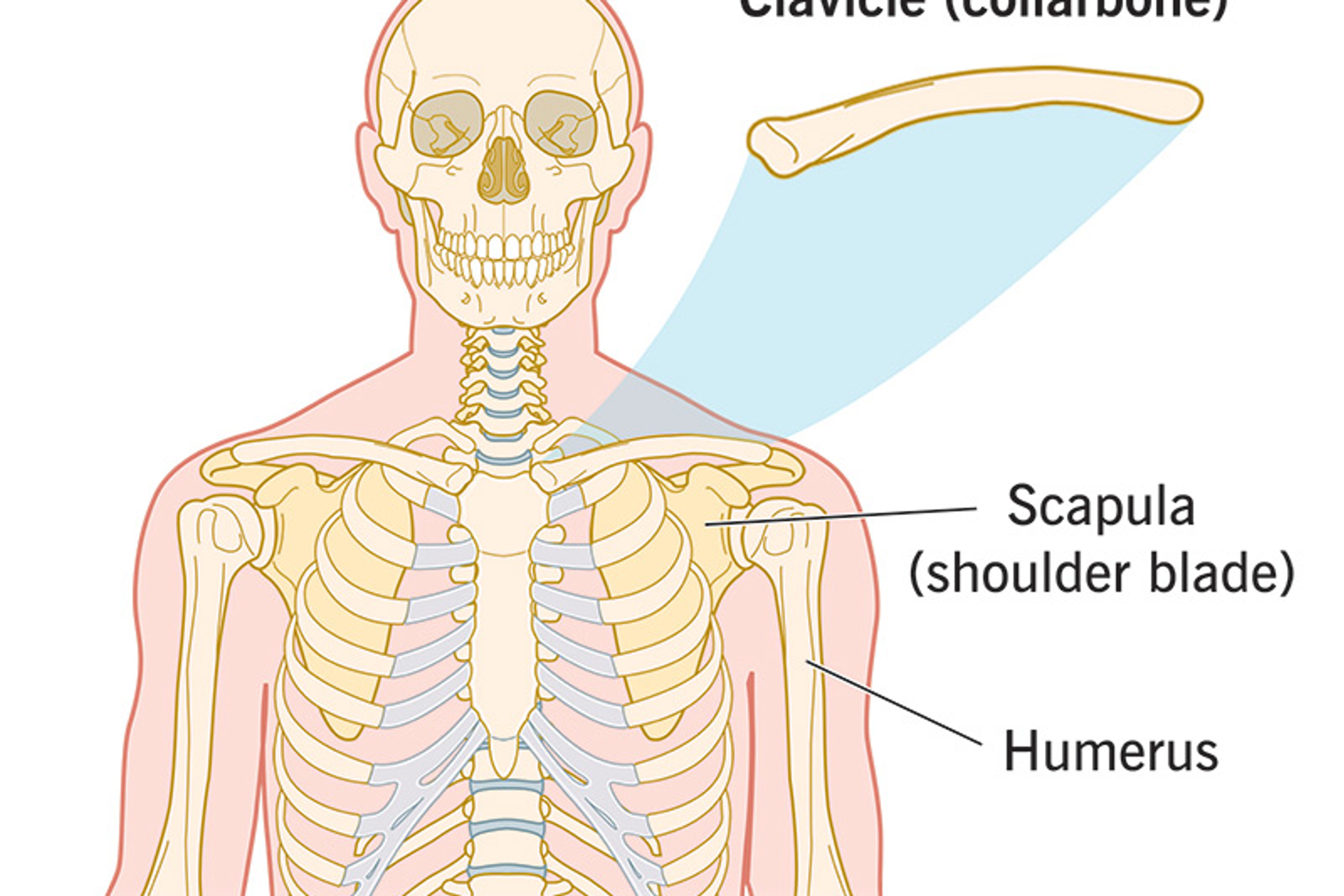
The clavicle, or collarbone, is the long, slightly S-shaped bone that runs across the top of the chest, from the breastbone to the top of the shoulder blade.
It acts like a strut. The clavicle holds the shoulder out and away from the body, giving the arm a stable base to move from. It is also the only bony connection between the arm and the rest of the skeleton.
Because it sits just under the skin with very little padding, the clavicle is one of the most commonly broken bones in contact sports. The classic mechanism is exactly what happened to McDavid: a fall or a direct impact onto the point of the shoulder, which compresses the bone until it gives way, most often in its middle portion.
The Oilers did not publicly detail the exact location or pattern of the fracture, so it is important not to assume the specifics. But for a hockey player, sliding shoulder first into the end boards at full speed is about as typical a clavicle injury as it gets.
Why surgery?
Not every broken collarbone needs an operation. Many clavicle fractures, particularly those where the bone ends stay lined up, are treated in a sling and allowed to heal on their own.
The decision usually comes down to how much the bone has shifted. When the broken ends are significantly displaced, overlapped or in several pieces, surgery becomes more attractive, especially for athletes.
The most common procedure is called open reduction and internal fixation. The surgeon realigns the broken pieces and holds them in place with a metal plate fixed to the bone with screws. That matches what Chiarelli described and what McDavid later confirmed himself.
For an athlete, the appeal is stability and predictability. With the bone fixed in position, the risk of the fracture failing to heal is lower, and athletes are generally able to start moving the shoulder sooner. One review found that athletes returned to sport around nine weeks after surgery, compared with around 21 weeks when the fracture was treated without surgery.
There was also one important piece of good news early on. According to Chiarelli, McDavid did not suffer any significant soft tissue damage around the fracture. Injuries to the surrounding ligaments and muscles can slow recovery considerably, and their absence made his rehabilitation more straightforward.
What did his recovery look like?
While every rehabilitation program is individualized, recovery after plate fixation of a clavicle fracture generally follows a progression like this:
Weeks 0 to 2
Protect and settle
The early focus is on managing pain and protecting the surgical site. A sling is usually worn for comfort, while gentle movement of the elbow, wrist and hand begins early. Conditioning through the lower body can continue. McDavid moved through this stage quickly. By November 16, less than two weeks after surgery, he was no longer wearing a sling and said he felt much better than he had expected.
Weeks 2 to 6
Restore movement
The focus shifts to restoring full shoulder range of motion while the bone continues to heal. Heavy loading and contact are still off limits, but light strengthening and conditioning can progress. By late November, roughly three and a half weeks after the injury, McDavid was working out in the pool and lifting weights, though he had not yet returned to the ice. With no soft tissue damage slowing him down, Chiarelli suggested he could be back by mid January.
Weeks 6 to 10
Rebuild strength and return to the ice
Once imaging shows the bone is healing well, strengthening becomes more demanding. For a hockey player, this is when skating, stickhandling and shooting can be progressively reintroduced. Shooting is particularly important because it loads the shoulder and the muscles that attach around the clavicle.
Weeks 10 and beyond
Return to contact
The final step is contact. Before returning to games, a player generally needs evidence that the bone has healed, full range of motion, and strength that allows him to absorb hits and battle along the boards with confidence.
How did his timeline compare?
McDavid returned on February 2, 2016, against the Columbus Blue Jackets. That was 91 days after the injury, or about 13 weeks after surgery. He missed 37 games.
That put his return slightly later than some of the research averages:
- In one study of athletes who had plate fixation, the average return to play was 83 days, though it ranged anywhere from 13 to 277 days.
- In a study of elite athletes, the average return to ice hockey was about 10 weeks, with surgically treated athletes returning after an average of 65 days.
- A larger review found the average return to play after surgery was around three months.
So McDavid’s recovery was not unusually fast or slow. It landed right around the three-month mark the research would predict, and a couple of weeks after the mid-January target that had been floated in November.
That makes sense. As Chiarelli noted at the time, an 18-year-old may take longer to come back than a fully developed adult. The Oilers were also out of the playoff race, and McDavid was the future of the franchise. There was no reason to rush him back into contact before the bone was ready.
How did he look?
It did not take long to find out.
In his first game back, McDavid had a goal and two assists in a 5 to 1 win over Columbus. The goal was the one people remember: in the second period, he carried the puck up the ice, split two defenders and beat goaltender Joonas Korpisalo with a backhand-to-forehand deke.
Fittingly, it looked a lot like the rush that had broken his collarbone three months earlier. McDavid acknowledged the resemblance himself, and said the shoulder had been feeling good for a while, even if he could not know how it would hold up in a game until he tried.
He finished his rookie season with 16 goals and 48 points in 45 games, an average of 1.07 points per game. He was a finalist for the Calder Trophy, which went to Artemi Panarin, and many believe he would have won it comfortably had he played a full season.
Ten years later
Looking back, the collarbone injury is now a footnote in McDavid’s career. The following season, at 20, he scored 100 points and won the Art Ross Trophy as the league’s leading scorer, the first of many major awards.
But it is a useful reminder of how a fairly common hockey injury is managed. A displaced clavicle fracture, fixed with a plate and screws, followed by a progressive return to shooting and contact, typically brings an athlete back in around three months. McDavid followed that path almost exactly.
The bigger lesson may be about patience. The Oilers could have pushed for a mid-January return. Instead, they waited until the bone and shoulder were ready, and McDavid came back looking exactly like the player they drafted.