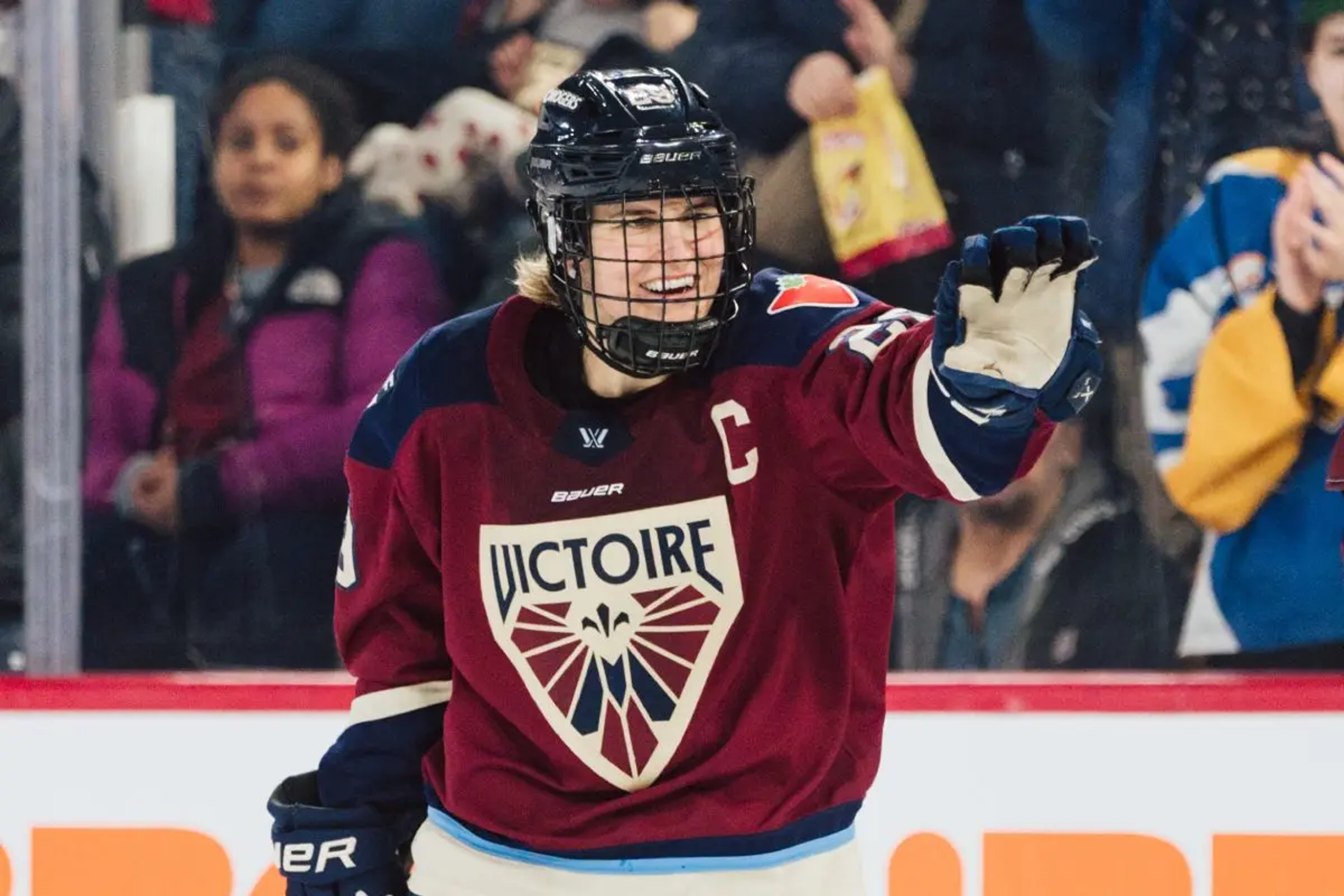
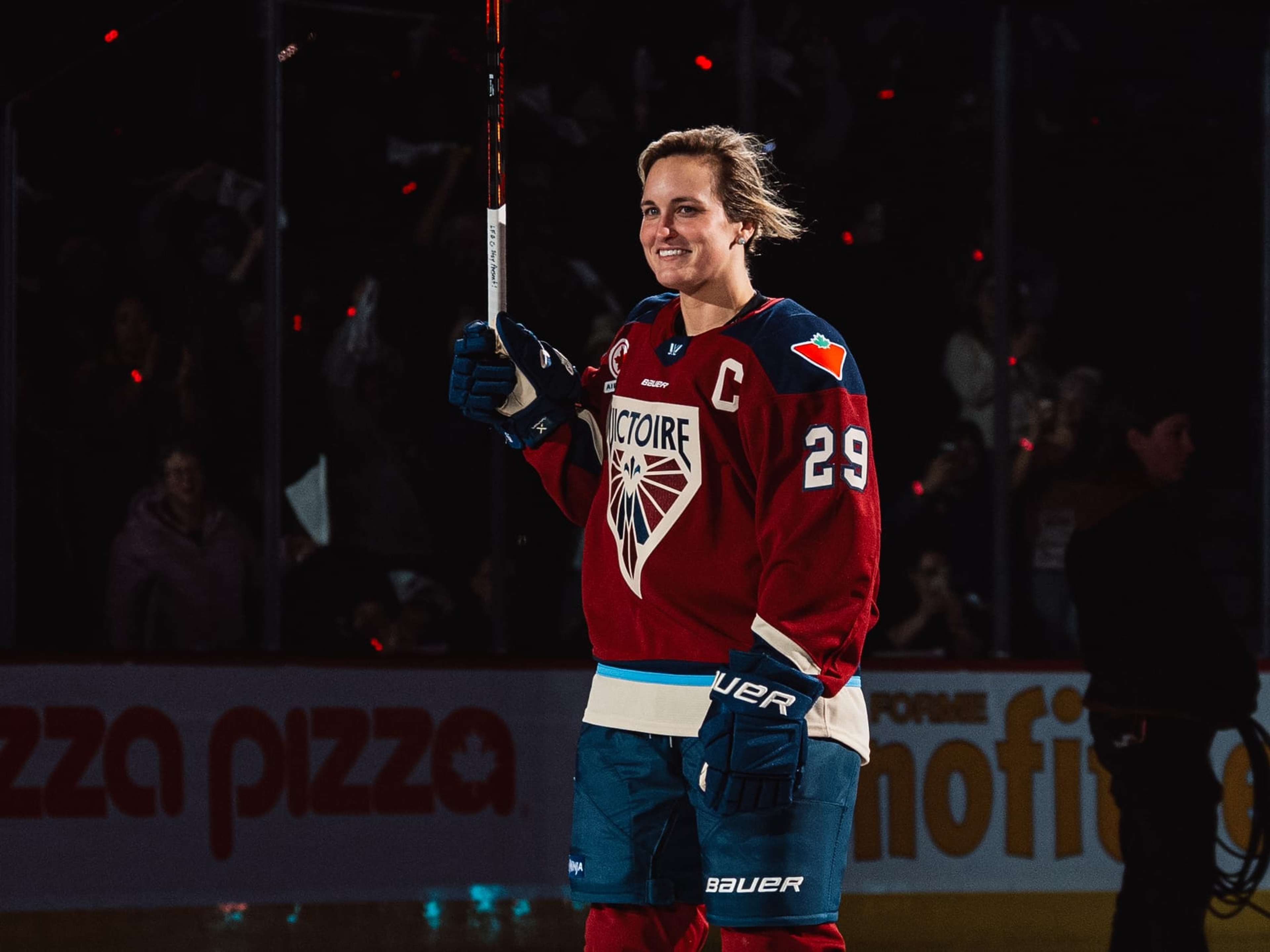
On May 20, Marie-Philip Poulin lifted the Walter Cup as captain of the Montréal Victoire. She was named playoff MVP after putting up eight points in nine games.
Five weeks later, she revealed she had done it on a torn ACL and a torn meniscus in her right knee.
Fighting back tears during a virtual press conference on June 25, Poulin explained that she had played as best she could because she wanted to be part of the journey that led to the championship. But it had become clear, she said, that surgery was necessary if she wanted to keep playing at a high level.
She had the operation this summer.
So how does someone play a championship run on a torn ACL, what did the surgery involve, and when could Montréal see its captain again?

How did it happen?
The injury began in February at the Milan Cortina Olympics.
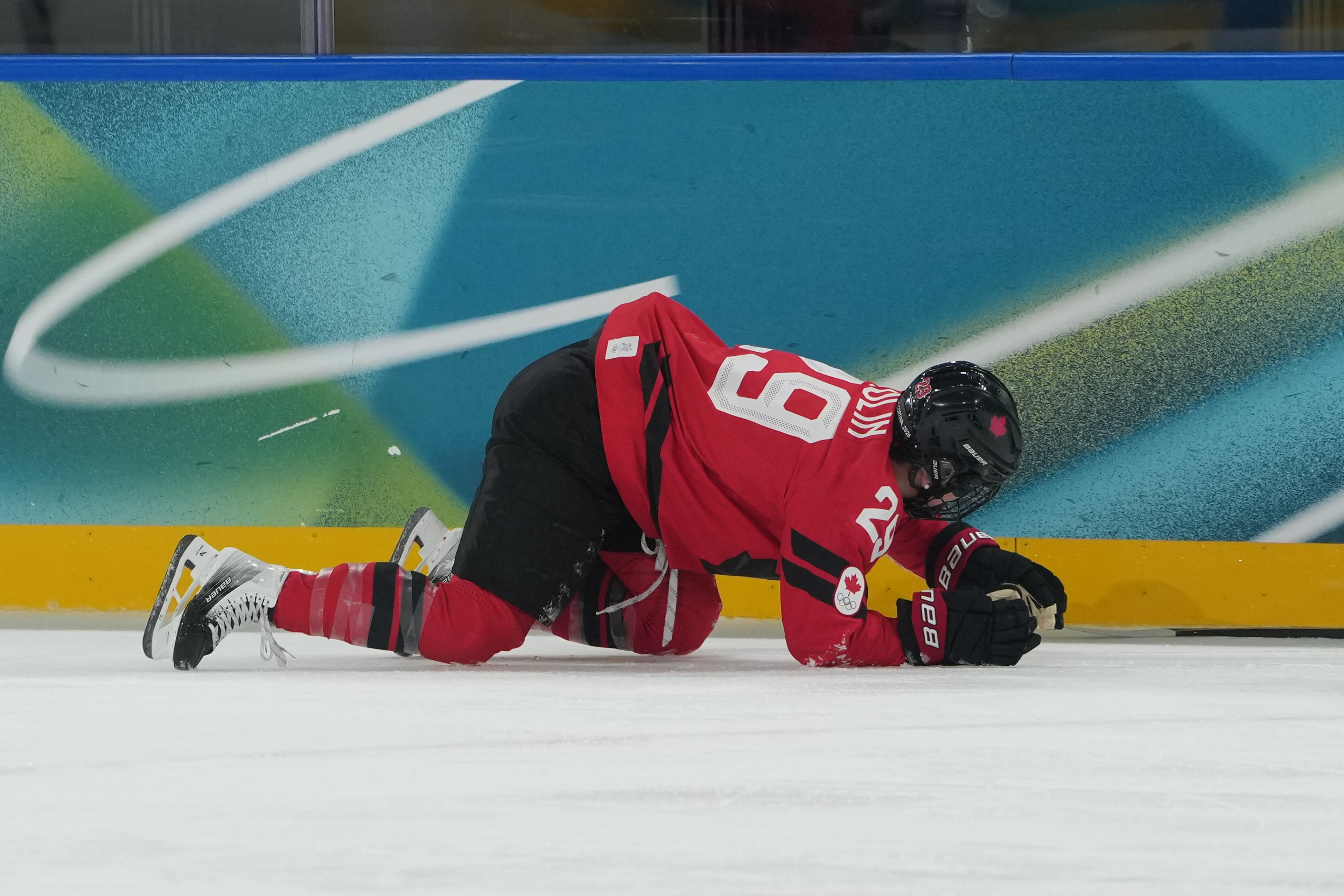
Poulin first hurt her right knee during Canada’s preliminary round game against Czechia. She missed two games, then returned for the knockout stage, finishing the tournament with three goals and four points in five games as Canada reached the final before losing to the United States in overtime.
Back in Montréal, she played three games for the Victoire before injuring the same knee again on March 15 against the Boston Fleet. That is when the ACL and meniscus tears were confirmed.
Rather than having surgery right away, Poulin chose treatment and rest. She missed 10 of Victoire’s last 11 regular-season games, then returned for the playoffs wearing a knee brace.
She was visibly limited at times, particularly in the semifinal against the Minnesota Frost. But she played every playoff game and was named MVP as the Victoire won their first title.
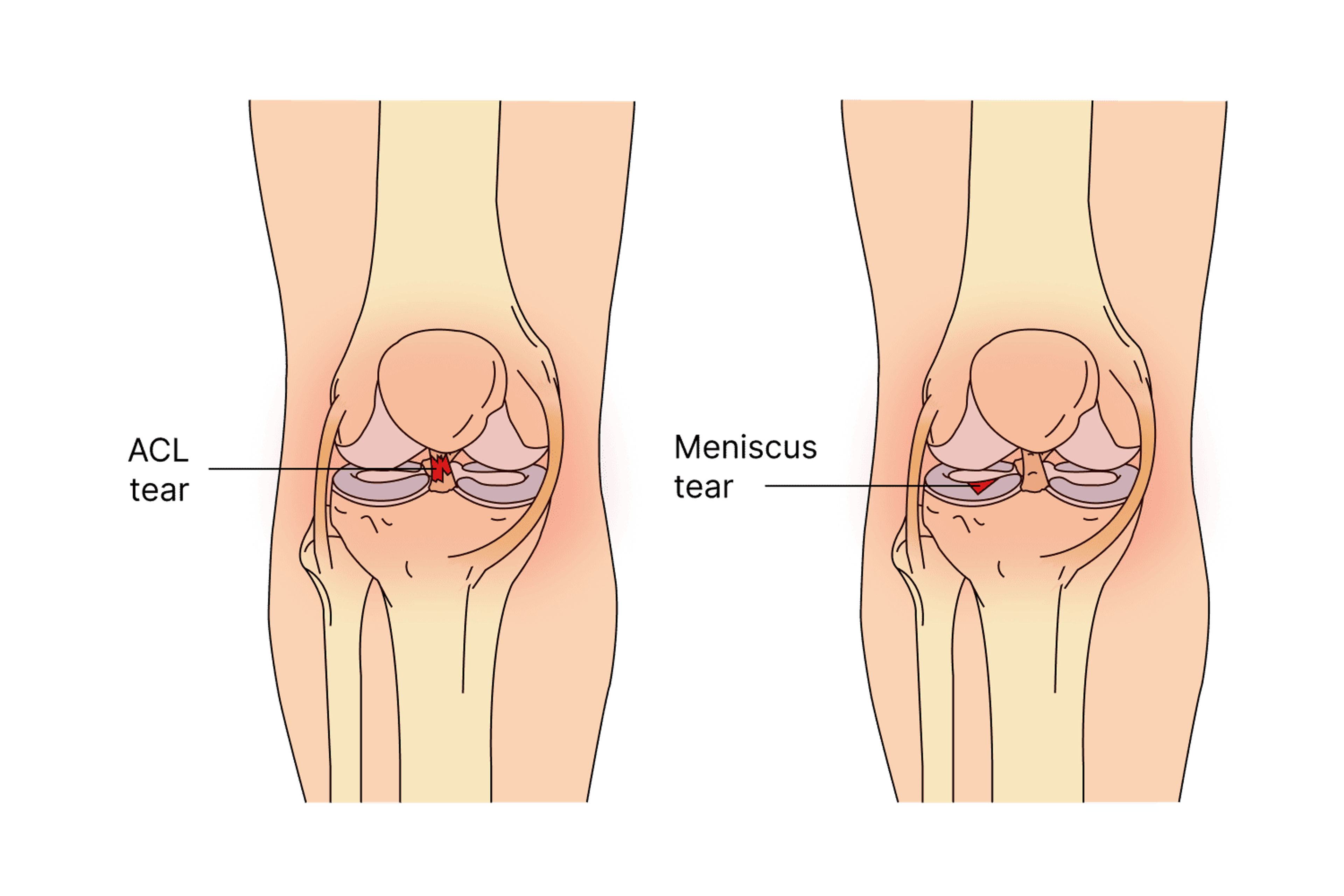
What are the ACL and meniscus?
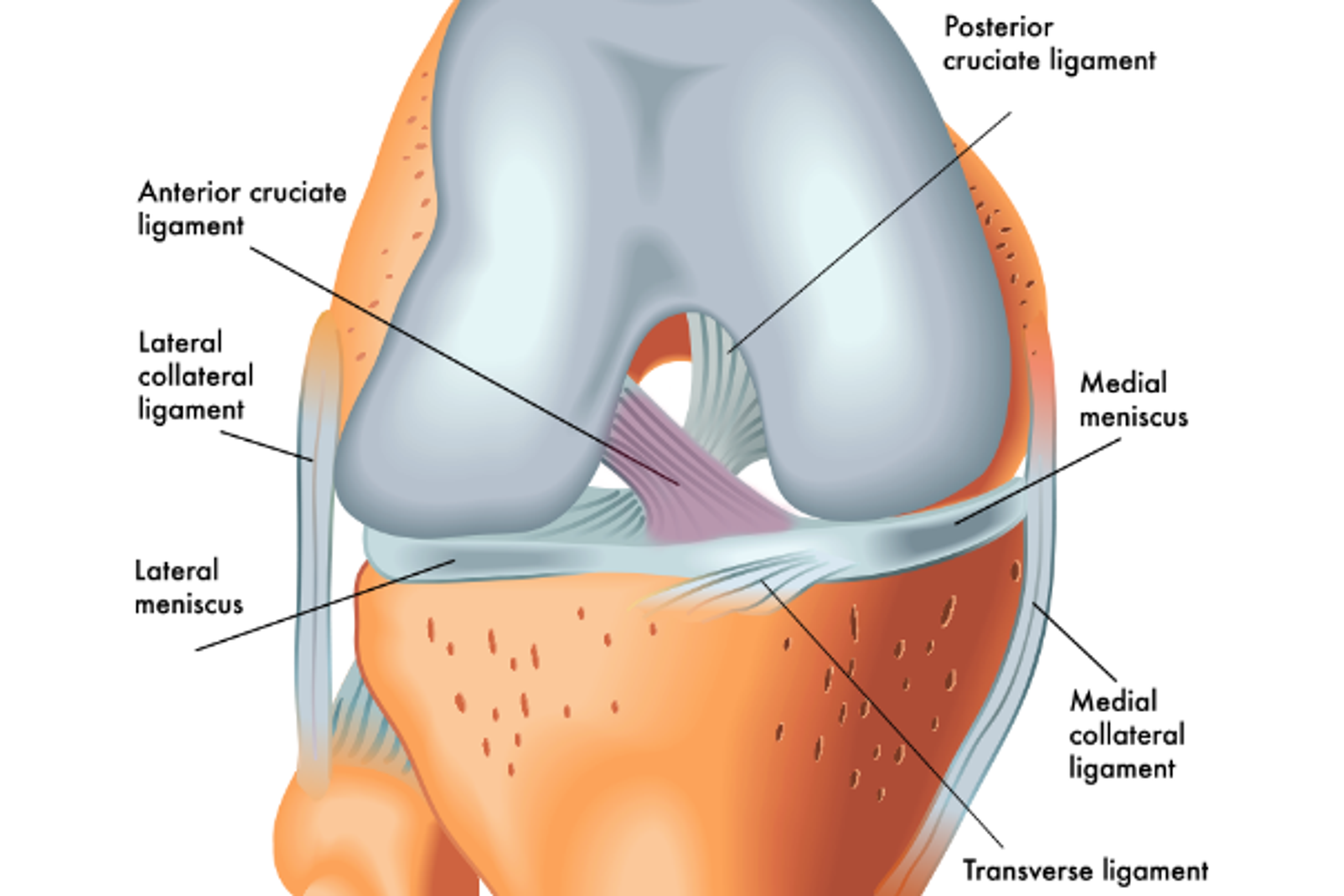
The anterior cruciate ligament, or ACL, runs through the center of the knee, connecting the thigh bone to the shin bone. Its main job is to stop the shin bone from sliding forward and rotating too much, especially when the knee bends and twists.
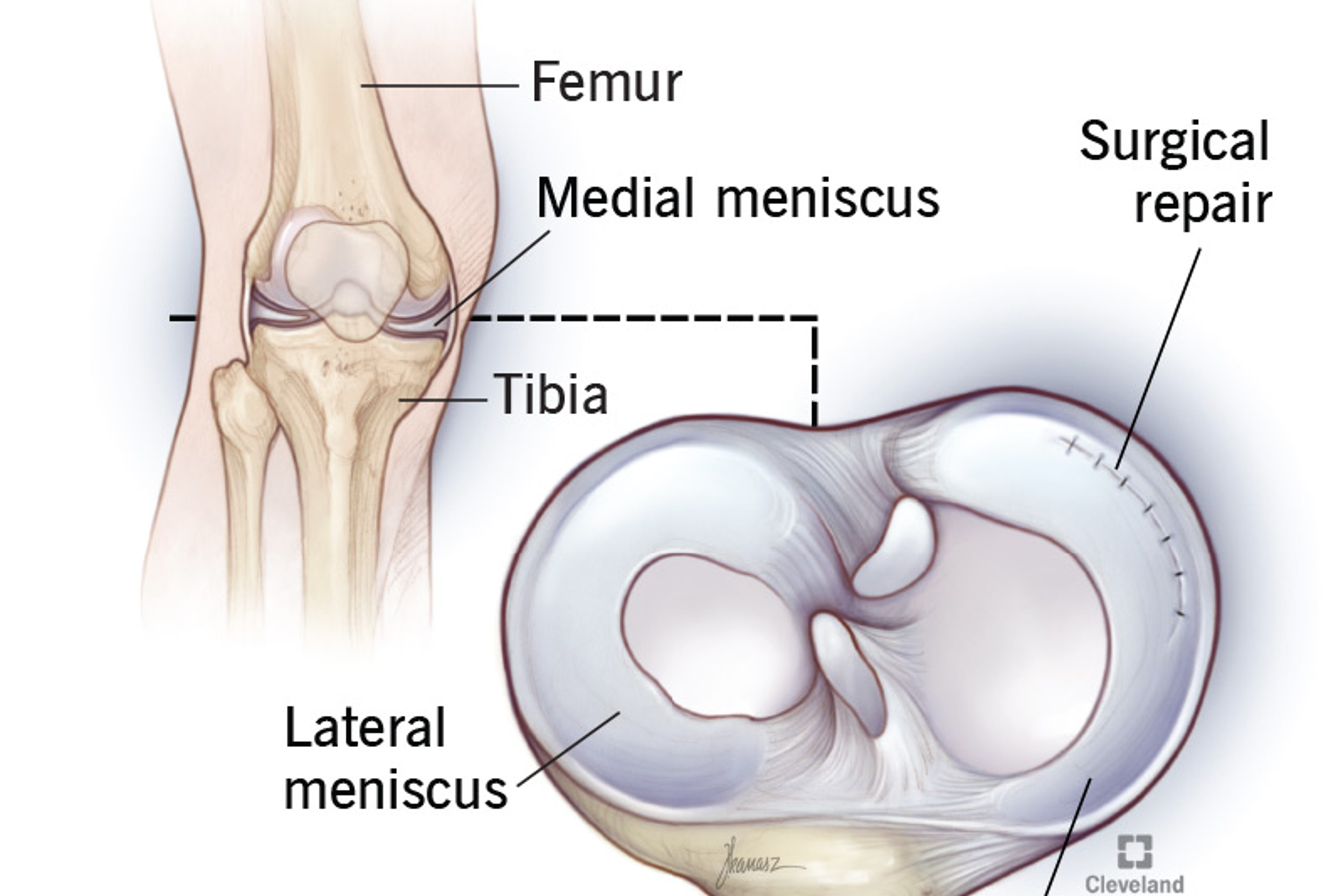
The meniscus is a C-shaped piece of cartilage that sits between the thigh bone and shin bone. Each knee has two, one on the inside and one on the outside. They act as shock absorbers, spreading the load through the joint and adding stability.
For a hockey player, the ACL is under stress in almost every crossover, tight turn, stop and change of direction. The meniscus absorbs the force of every stride.
How can someone play with a torn ACL?
This is the question many fans asked after Poulin’s announcement.
The answer is that a torn ACL does not always mean a player cannot move. The muscles around the knee, particularly the quadriceps and hamstrings, can help control the joint. With strong muscles, good movement patterns and a supportive brace, some athletes are able to function in the short term.
The problem is what happens when the knee is put under twisting or pivoting load. Without the ACL, the shin bone can shift forward and rotate, causing the knee to buckle or give way. Each time that happens, the other structures in the knee, including the meniscus and the cartilage that covers the ends of the bones, are put at risk.
That is why Poulin’s decision made sense. She could get through a few weeks of playoff hockey with a brace and careful management, but continuing to play on an unstable knee for seasons to come would risk more damage. In her own words, it was a difficult choice in the short term, but an obvious one when thinking about the years ahead.
What did the surgery involve?
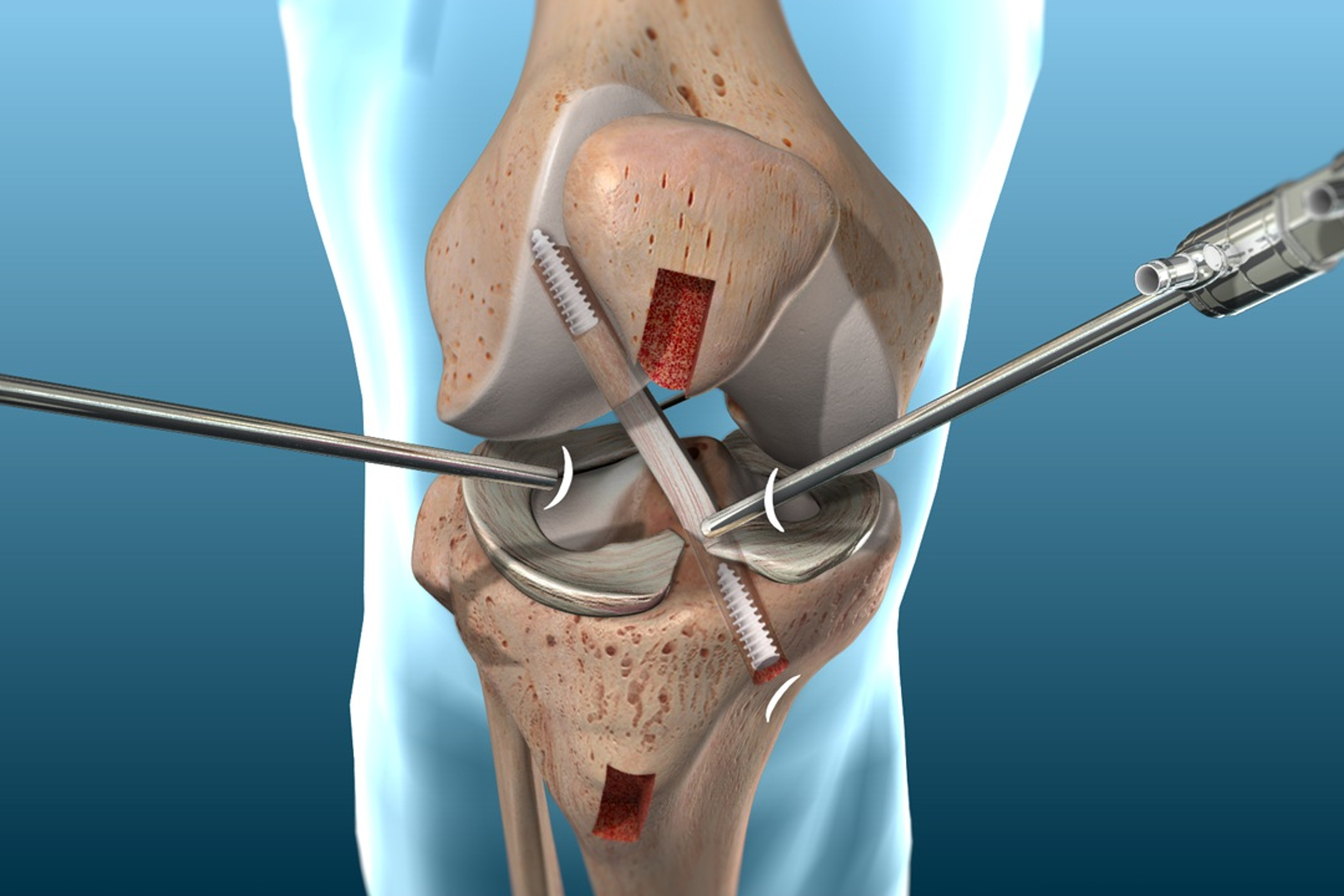
A torn ACL does not heal on its own, so the standard approach is ACL reconstruction. The surgeon removes the torn ligament and replaces it with a graft, usually taken from a tendon around the knee, which is anchored in tunnels drilled through the thigh bone and shin bone. Over the following months, that graft gradually remodels into a new ligament.
The meniscus can be treated in two main ways. It can be repaired by stitching the torn edges back together, which preserves the cartilage but requires a more protected early recovery. Or the damaged portion can be trimmed away, which allows a quicker early recovery but leaves less cushioning in the knee.
Which option was used for Poulin has not been disclosed.
Where is she in her recovery?
On October 1, Poulin gave an update on TVA’s Salut Bonjour. She had spent several weeks on crutches after surgery, with reports describing a period of six weeks to two months, and had returned to walking.
She said there is no date circled on the calendar. She would like to return this season, but only if she is completely ready, and described the usual timeline for a ligament and meniscus injury as roughly nine to 12 months.
What does the rehab look like?
While every rehabilitation program is individualized, recovery from ACL reconstruction with meniscus surgery generally follows a progression like this:
Weeks 0 to 6
Protect the knee
The early focus is on controlling swelling, restoring the ability to fully straighten the knee, and getting the quadriceps working again. Crutches are used while weight bearing progresses. If the meniscus was repaired, this phase is usually more protected, with limits on how much the knee can bend under load.
Months 2 to 3
Restore walking and strength
The athlete moves off crutches and works toward walking normally. Strengthening progresses for the quadriceps, hamstrings, glutes and calves, along with balance and control on one leg.
Months 3 to 6
Build toward the ice
As strength improves, running is gradually reintroduced, followed by jumping and landing. For a hockey player, controlled skating can often begin during this period, starting in straight lines before progressing to crossovers and turns.
Months 6 to 9
Return to hockey movements
The focus shifts to the specific demands of hockey: explosive starts, hard stops, tight turns, battles along the boards and, eventually, contact. Testing compares strength and movement between the two legs.
Months 9 to 12
Return to play
The final decision depends on more than the calendar. Athletes are generally expected to show quadriceps strength close to that of the other leg, pass a series of hop and movement tests, and feel confident in the knee.
When could she return?
With surgery in the summer, a nine-to-12-month timeline points to a return somewhere between the spring and summer of 2027.
The Violets open their title defence at Place Bell against PWHL Hamilton on December 5. Poulin will not be in the lineup. She is also missing the 2026 Women’s World Championship in Denmark.
If her recovery goes well, the earliest realistic window would be late in the regular season or the playoffs. But there are good reasons not to rush.
One of the most influential studies on ACL reconstruction, the Delaware-Oslo cohort, found that the risk of reinjury dropped by 51 percent for every month that return to sport was delayed, up to nine months after surgery. Athletes who returned with quadriceps strength that more closely matched their other leg also had a lower risk of reinjury.
What comes next?
Poulin has been clear that she wants to come back, and has said she never considered retirement during this process.
Her approach so far has matched the evidence. She is taking it one day at a time, staying focused on the present and refusing to set a date until her knee is ready.
For a player who has given Canada and Montréal so many defining moments, the next one may simply be her first shift back. Whenever it comes, it will be well earned.