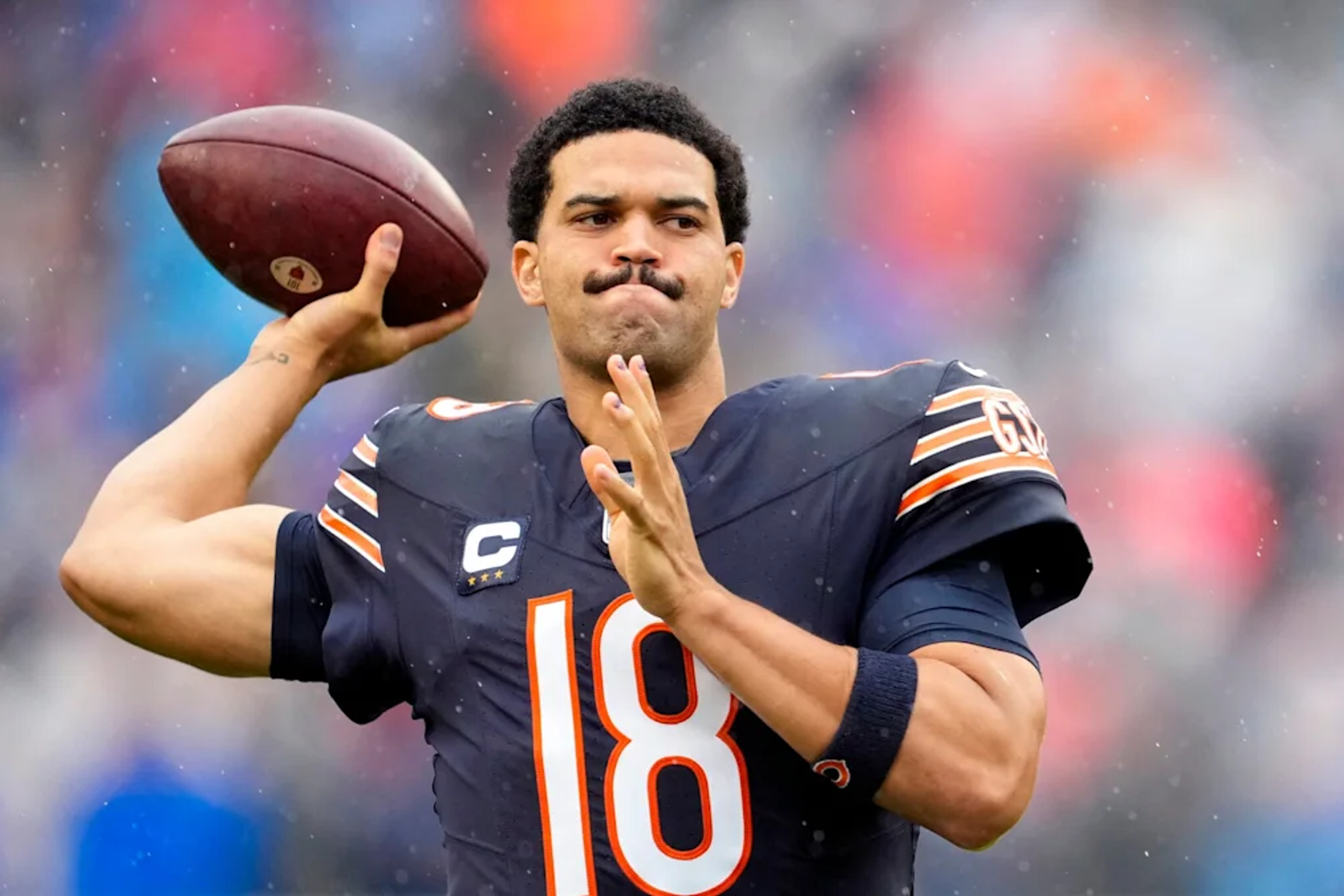
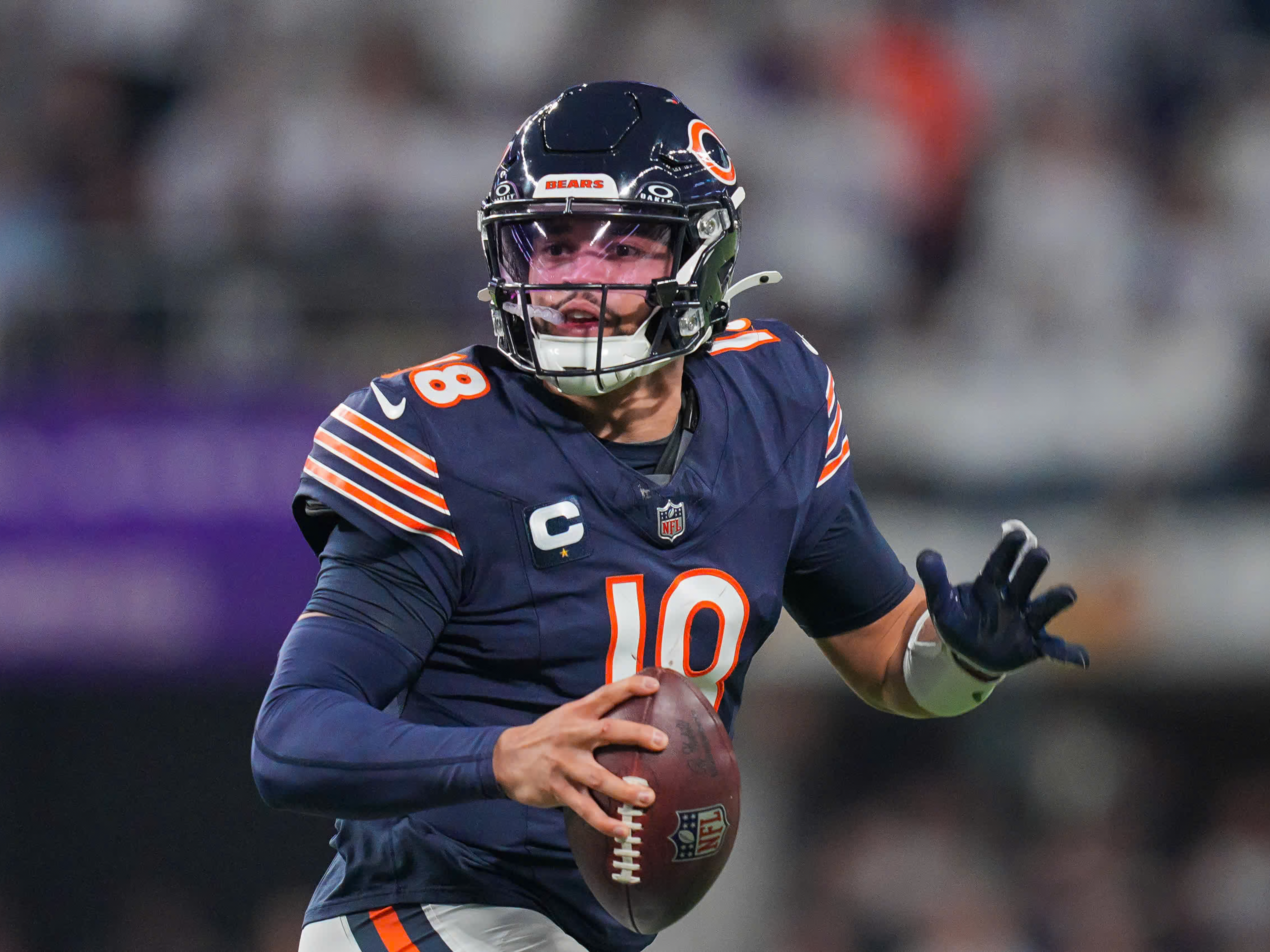
The Bears opened the season by scoring 59 points against the Carolina Panthers. Caleb Williams threw for 269 yards and two touchdowns and ran for two more.
One week later, on a rainy afternoon at Soldier Field, everything changed.
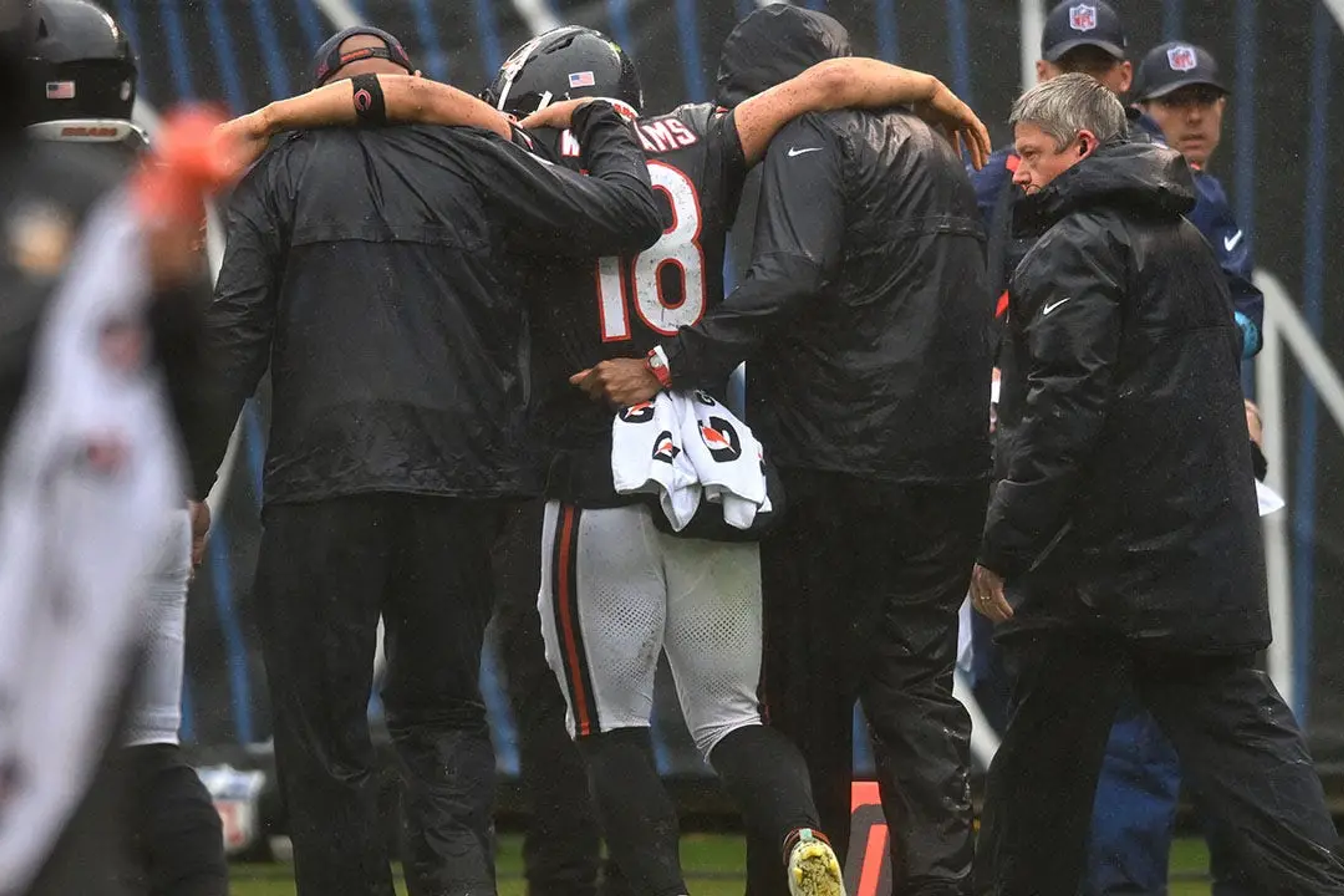
With about seven and a half minutes left and the Bears trailing the Minnesota Vikings 6 to 3, Williams rolled left on a bootleg from first and goal. He had a clear path to the end zone. Then he went down.
Vikings linebacker Andrew Van Ginkel had dived at him and missed. Van Ginkel said afterward he did not make contact, and Williams simply dropped. He grabbed at the back of his right leg and let out a yell, tried twice to get up on his own, and was helped off by two trainers. After several minutes in the medical tent, he was carted to the locker room with a towel over his head. As the cart reached the tunnel, he pulled the towel off and pumped his arm for the crowd.
The Bears lost 9 to 3.
After the game, Ben Johnson said his first worry had been the knee, and that he was relieved it was not. But he added that a hamstring could be damaging as well.
What is the hamstring?
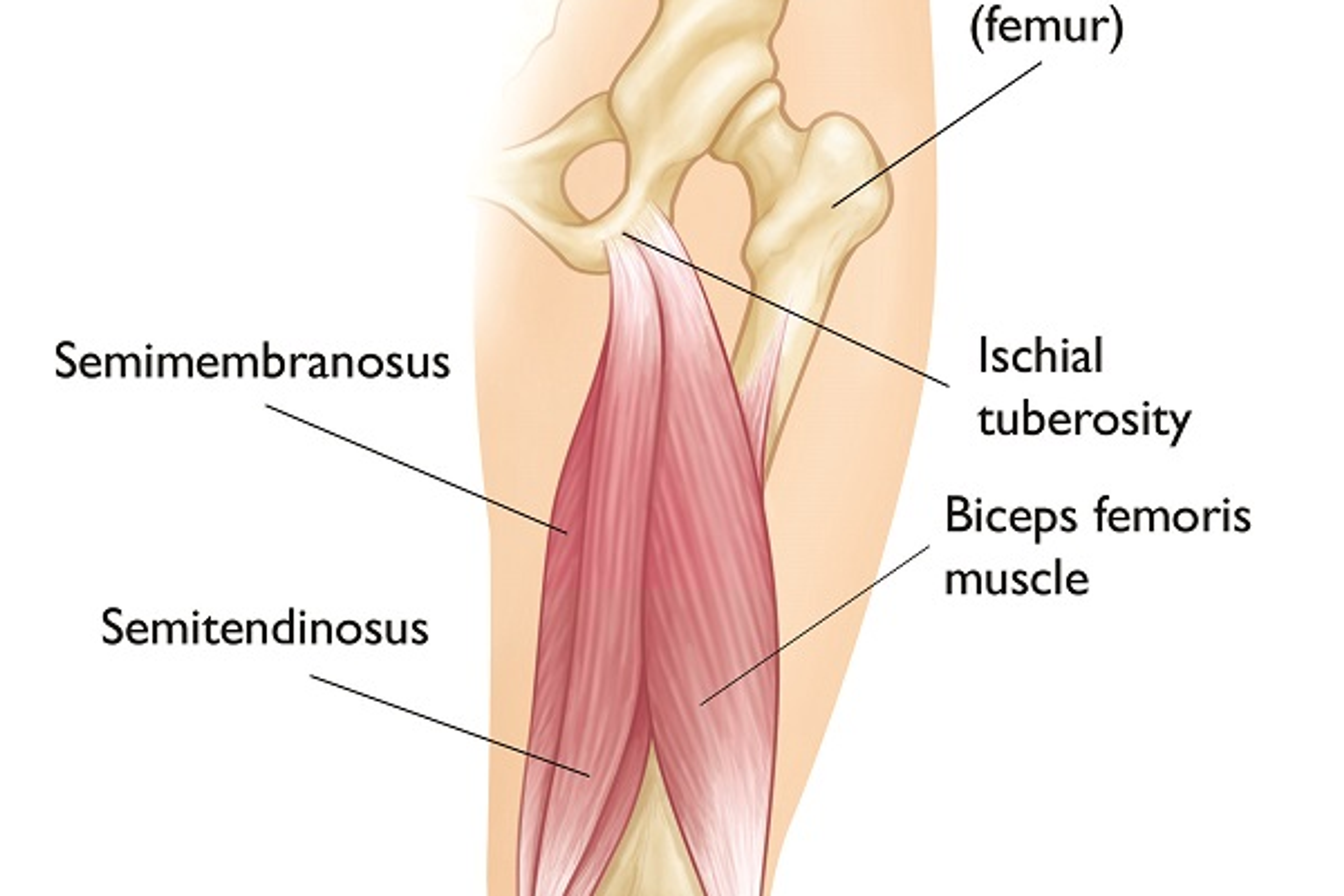
The hamstrings are a group of three muscles (semitendinosus, semimembranosus, and the biceps femoris) that run down the back of the thigh: the biceps femoris on the outside, and the semitendinosus and semimembranosus on the inside.
They start at the bottom of the pelvis and attach just below the knee, which means they cross two joints. They help straighten the hip and bend the knee.
Their most demanding job happens during sprinting. As the leg swings forward before the foot hits the ground, the hamstrings have to work hard to slow the lower leg down while they are being stretched. That combination of high force and lengthening is when they are most vulnerable.
That is exactly the situation Williams was in: accelerating on a scramble, at full speed, on a wet field.
How bad was it?
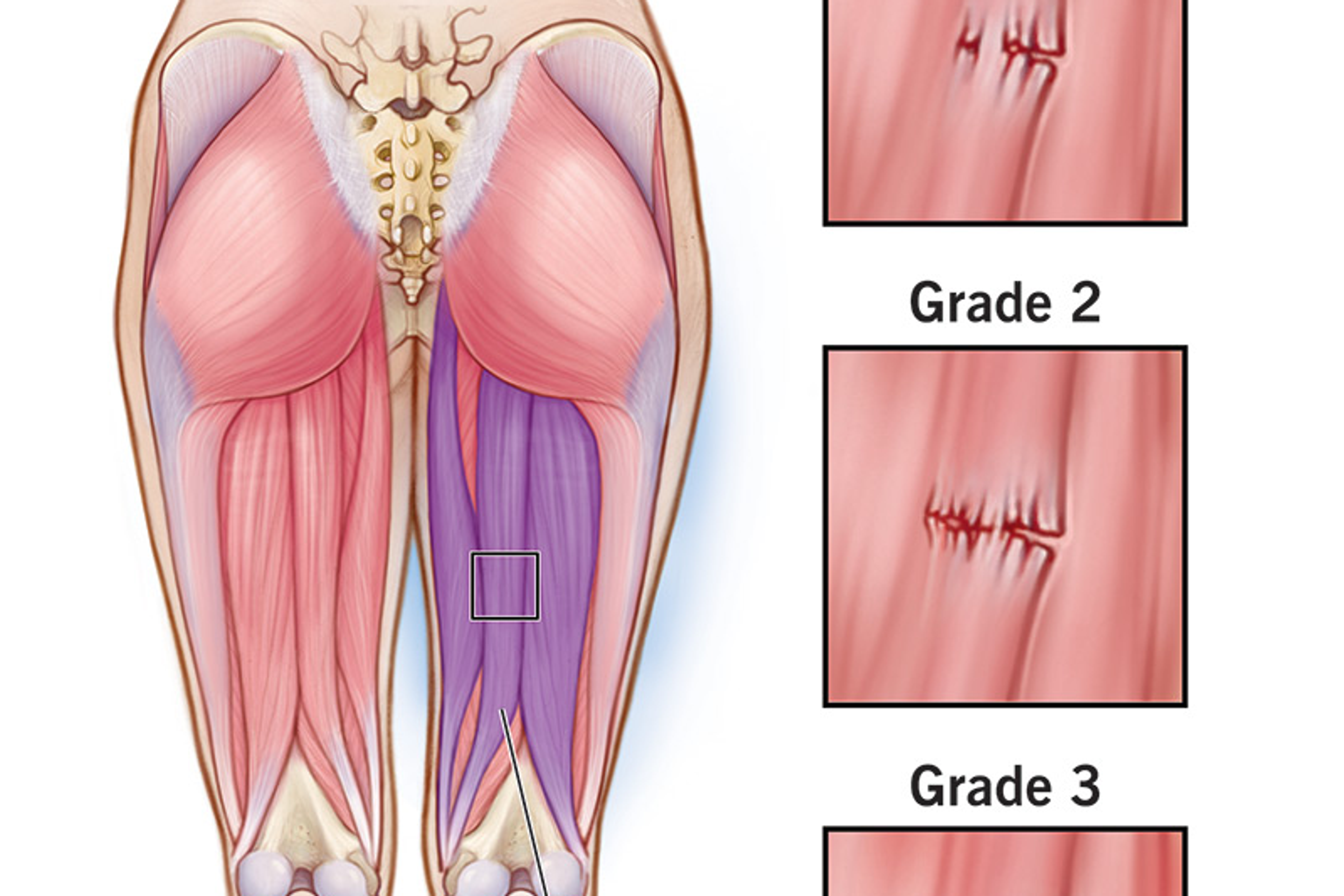
Hamstring injuries are generally graded on a scale of one to three:
- Grade 1: A mild strain, with damage to a small number of muscle fibres.
- Grade 2: A partial tear of the muscle.
- Grade 3: A complete or near-complete tear, sometimes with the tendon pulling off the bone.
The Bears never released a grade.
Williams had an MRI the next morning. Johnson called the results “somewhat encouraging” and listed him as week to week, while also saying he expected his quarterback to miss some time. Early reports described a Grade 1 strain. Later in the week, ESPN and NFL Network reported it was a Grade 2 injury that doctors expected to take three to four weeks.
When Williams finally spoke about it in October, he said he had suffered a tear but declined to give the grade, adding that the reporting on his injury had not been accurate.
The important news was what the MRI did not show. There was no complete rupture and no indication that surgery would be needed. The Bears also never placed him on injured reserve, which kept open the possibility of a quicker return.
It is worth noting that this was not his first hamstring injury. At USC in 2022, he hurt his left hamstring on a long run in the Pac 12 championship game, finished that game, and played in the Cotton Bowl a month later.
Why did it look so dramatic?
Williams was in obvious pain on the field and needed a cart. Yet he was walking through the locker room under his own power after the game.
That is not unusual with hamstring injuries. The moment the muscle tears is often very painful, and the muscle can spasm and tighten around the injury, making it hard to put weight through the leg in the first few minutes. Once that settles, many athletes are able to walk, even with a significant strain.
How painful the injury looks in the moment is not always a reliable guide to how long a player will be out.
What did the rehab look like?
While every rehabilitation program is individualized, recovery from a Grade 2 hamstring strain generally follows a progression like this:
Days 0 to 7
Protection
The early focus is on managing pain and swelling while keeping the leg moving. Walking is encouraged as soon as it is comfortable. Gentle hamstring activation and pain free stretching can begin, along with upper body work and conditioning that does not stress the muscle.
Weeks 1 to 2
Load the muscle
As symptoms settle, strengthening progresses, with a particular focus on exercises that load the hamstrings while they lengthen, such as Nordic curls and other eccentric work. Light jogging can begin once walking and basic strengthening are pain free. Williams said he was getting five to six hours of treatment a day and was back on the field throwing about a week and a half to two weeks after the injury.
Weeks 2 to 4
Build back to full speed
The final stage reintroduces sprinting, acceleration and changes of direction, gradually building toward full speed. For a quarterback like Williams, that also means dropbacks, rolling out, scrambling and throwing on the move.
He returned to practice on a limited basis on October 9, nearly three weeks after the injury. He was listed as questionable for the game against the Green Bay Packers but did not play. On October 15, he was a full participant in practice for the first time since the injury.
How has he looked since returning?
Williams returned on October 18 in Atlanta, 28 days after the injury and right at the end of the reported three to four week window.
He did not look like a player coming off an injury. He completed his first 12 passes, threw a touchdown to Colston Loveland on the opening drive, and finished 30 of 36 for 305 yards with no interceptions in a 31 to 23 win. According to Next Gen Stats, he was a perfect 24 of 24 from a clean pocket. The Bears even trusted him with a quarterback sneak late in the game.
Four days later, on Thursday Night Football, he threw for 308 yards and two touchdowns in a 30 to 24 win over the New England Patriots. That made him the first Bears quarterback with back to back 300 yard games since 2018.
On November 2, he went 24 of 34 for 247 yards and a touchdown in a 34 to 17 win over the defending champion Seattle Seahawks.
Then came Sunday night against the Tampa Bay Buccaneers, the roughest game of his season. Williams threw a career high four interceptions, the first time he has done that at any level. But with the game tied in the final seconds, he hit Loveland for 38 yards to set up Cairo Santos’ game winning field goal in a 27 to 24 win.
The Bears are four and zero since he returned, seven and two overall, and on their bye this week.
What should we watch going forward?
The hamstring itself has given no sign of trouble. Williams has played four full games, including a Thursday night game just four days after his return, and the Bucs game looked like a decision making issue rather than a physical one.
There are two things worth keeping an eye on.
The first is how much he is running. Before the injury, he ran for 65 yards in Week 1 and 42 yards on five carries in Week 2. In his last three games combined, he has run 12 times for 35 yards. That could reflect the game plans, or a deliberate choice to protect him, and it is important not to read too much into it. But for a quarterback whose ability to extend plays is such a big part of his game, it is worth watching.
The second is reinjury risk. Hamstring injuries have a reputation for coming back. A study of NFL hamstring injuries from 2009 to 2020 found that more than 38 percent were recurrences, and about 12 percent were reinjuries in the same season. The highest risk was for players who returned within two weeks. Williams took four, which works in his favor.
Research from Australian football also suggests that the risk of a hamstring reinjury stays elevated for around 15 weeks after a player returns. For Williams, that window runs to the end of January, right through the playoffs.
That does not mean another injury is likely. It means the Bears’ medical staff will keep working on his hamstring strength and managing his workload long after he got back on the field.
The bye week could not come at a better time. A week off gives the hamstring more recovery time before the stretch run.